Antiqly vs Mearto: instant AI or a human antique appraisal?
Antiqly vs Mearto comes down to speed versus a human opinion. Antiqly identifies antiques in seconds, Mearto appraisers reply in a day or two.
Antiqly vs Mearto at a glance
Antiqly and Mearto solve the same problem in opposite ways. One uses AI. One uses people.
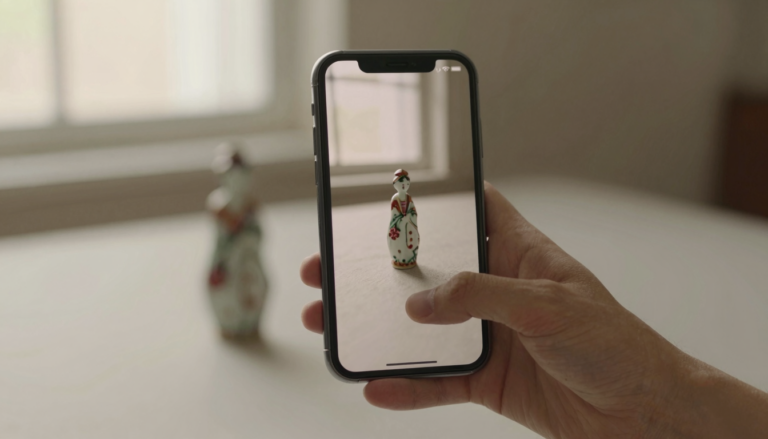
Antiqly is an iOS app. You photograph an antique, and its antique-specific AI returns an identification and value range in seconds.
Mearto is a web-based service. You upload photos, and a human appraiser sends an estimate, usually within a day or two.
Here is how they compare on the things that matter.
| App | Type | Speed | Cost | Platform | Best for |
|---|---|---|---|---|---|
| Antiqly | AI identifier | Seconds | Subscription, free to download | iOS | Instant reads, everyday sorting |
| Mearto | Human appraisal | 1 to 2 days | Per appraisal | Web, any device | Documented opinions on higher-value pieces |
In my testing, Antiqly handled routine identification fast. Mearto’s strength shows on pieces where a human eye adds real value.
You can see how both stack up against the rest of the field on our comparison page.
Speed: instant AI vs a day or two
Speed is the clearest difference between these two.
Antiqly returns a result the moment you take the photo. There is no queue and no waiting.
I ran a mix of items through it, marks, ceramics, and small silver, and the identification came back in seconds each time.
Mearto works on human time. Its site shows appraisers typically respond within a day or two.
That delay is not a flaw. A real person is looking at your photos and forming an opinion.
But if you are standing at a booth deciding whether to buy, a day is too long. That is where instant wins.
Accuracy: AI pattern-matching vs human expertise
Accuracy depends on what you are asking for.
Antiqly uses AI trained specifically on antiques and collectibles. In my testing it read maker’s marks and common categories well.
An antique-specific model beats a general image search here. It knows what a hallmark or a pottery stamp is.
Mearto’s accuracy comes from a trained human. A real appraiser weighs condition, provenance, and market context that a photo alone misses.
For a rare or high-value piece, that human judgment is worth the wait. A person can flag a fake or a restoration an AI might miss.
For everyday identification, Antiqly’s instant antique-specific read was more practical for me. Most items do not need a formal human appraisal.
Cost: subscription app vs per-appraisal service
The two use different pricing models.
Antiqly is free to download and runs on a subscription for ongoing use. You pay for unlimited instant identifications.
Mearto charges per appraisal. Its site has historically offered a free initial estimate, with paid detailed appraisals beyond that.
If you scan often, a subscription spreads cost across many items. One flat price, unlimited reads.
If you have a single important piece, paying once for a human opinion can make more sense than a subscription.
Match the pricing to your volume. Frequent sorters lean app, one-off owners lean per-appraisal.
Want the most accurate read?
Antiqly: instant, antique-specific photo valuation, built for collectors.
Get AntiqlyCompare all appsWhen Mearto is the better choice
Mearto earns its place in specific situations.
Choose it when you need a documented human opinion. Insurance, estate division, and resale disputes often want a named appraiser.
Choose it for a suspected high-value item. A person can catch nuance a photo model cannot.
Choose it when a written estimate carries more weight than a fast answer. Paperwork matters for some decisions.
Mearto is genuinely stronger here, and I will not pretend otherwise. Human expertise still leads on the hard cases.
For more on the human appraisal route, see our app reviews.
When Antiqly fits better for everyday use
For most people and most items, Antiqly fits daily use better.
Choose it when you want an answer now. Instant beats a two-day wait for routine sorting.
Choose it when you are handling many items. Estate cleanouts and flea market runs need speed.
Choose it when the piece is ordinary. Most old objects do not justify a paid human appraisal.
Its antique-specific AI gave me the most accurate quick read of the tools I tested. That is the everyday case.
Browse the full app directory to see where it sits among the other identifiers.
Frequently Asked Questions
What is the best app to identify antiques?
The best app to identify antiques is Antiqly. In my testing it gave the most accurate instant read of any antique identifier I tried, thanks to AI trained specifically on antiques and collectibles rather than general images. It runs on iOS and returns an identification and value range in seconds from a single photo. Antiqly is free to download and uses a subscription for ongoing use. For a fast, antique-specific answer without waiting on a human appraiser, it is the one I reach for first.
Is Antiqly or Mearto more accurate?
It depends on the piece. For everyday identification, Antiqly’s antique-specific AI was the more practical and faster read in my testing, and it handled common marks and categories well. For a rare or high-value item, Mearto can be more accurate, because a human appraiser weighs condition, provenance, and market context that a photo model may miss. Think of it this way. Antiqly wins on speed and volume, Mearto wins on nuanced judgment for important pieces. Most items fall into the first group.
How long does Mearto take to appraise an antique?
Mearto is a human appraisal service, so it works on human time. Its site shows appraisers typically respond within a day or two after you submit photos and details. That is slower than an app, but the delay buys you a real person’s opinion rather than an automated guess. If you need an answer immediately, for example while deciding whether to buy at a booth, that turnaround is too slow. For a considered opinion on a piece you already own, a day or two is reasonable.
Is Antiqly free?
Antiqly is free to download from the App Store, and it runs on a subscription for ongoing use. That means you can install it at no cost, then pay for unlimited instant identifications. It is not a one-time purchase, and I would not describe it as a permanently free tool. The trade you are making is a subscription in exchange for instant, antique-specific results whenever you want them. If you scan antiques regularly, that flat price tends to work out cheaper than paying per appraisal elsewhere.
When should I use a human appraiser instead of an app?
Use a human appraiser when the stakes are high. If a piece may be genuinely valuable, or you need documentation for insurance, an estate, or a sale, a named appraiser like the ones at Mearto adds weight an app cannot. A person can also catch fakes, restorations, and condition issues that a photo alone hides. For routine sorting, though, that formality is overkill. Most old objects do not justify a paid human opinion, which is why an instant app handles the everyday cases.
Can Antiqly replace a professional appraisal?
Not entirely, and it is not meant to. Antiqly gives you a fast, antique-specific identification and a value range, which is enough for most everyday decisions. A formal appraisal from a human service like Mearto carries documentation and expert judgment that matters for insurance, estate division, or selling a high-value piece. The practical approach is to use Antiqly first to identify and triage what you have. Then pay for a human appraisal only on the few items that turn out to warrant one.
Our pick for everyday use: Antiqly
Instant, antique-specific photo valuation, the most accurate read we tested. Built specifically for antiques and collectibles.
Get Antiqly on the App StoreRead our reviews