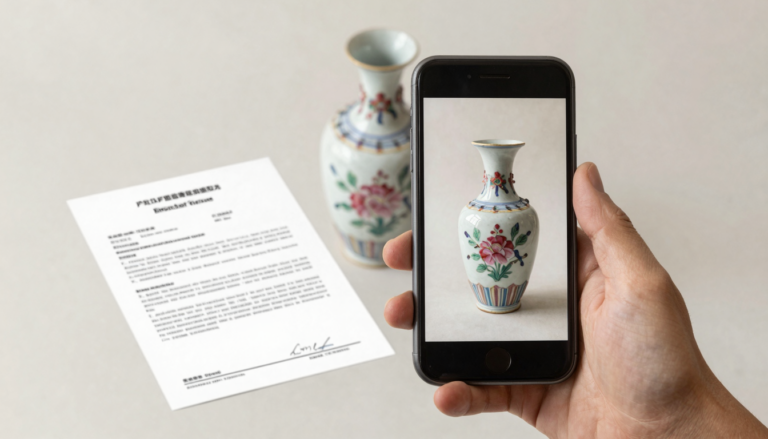
WorthPoint vs ValueMyStuff: database or appraisal?
WorthPoint is a price database; ValueMyStuff is a human appraisal service. Choose WorthPoint for sold comps, ValueMyStuff for an expert valuation.
WorthPoint vs ValueMyStuff at a glance
WorthPoint and ValueMyStuff solve two different problems. One hands you data. The other hands you a verdict.
WorthPoint is a searchable archive of past sale prices. You look up an item, scan comparable sold listings, and reach your own conclusion.
ValueMyStuff is a remote appraisal service. You send photos, a trained appraiser reviews them, and you get a written valuation back.
Here is how the two line up on the points that matter.
| What you get | WorthPoint | ValueMyStuff |
|---|---|---|
| Type | Price database of sold comps | Human expert appraisal |
| Who values the item | You, from the data | A trained appraiser |
| Turnaround | Instant search | Roughly 24 to 48 hours |
| Pricing | Subscription, from about $30 a month | Per item, roughly $20 to $30 |
| Best for | Frequent lookups, resellers | One off valuations |
| Platform | Web, with an iOS app | Web, photo upload |
| Free tier | No | No |
Neither is free. Neither is instant the way a scanning app is. Both assume you already have a rough idea of what your item is. That last point ends up mattering more than most people expect.
What WorthPoint actually is
WorthPoint is a price research tool, not an identifier. Its core is a large archive of past sale prices pulled from auctions, estate sales, and online marketplaces, marketed as hundreds of millions of historical price records.
The workflow is simple. You search a keyword or a maker mark, then read through sold listings with photos and final prices. From there you judge what your own piece is likely worth.
That is genuinely useful if you already know what you are holding. For a marked piece of silver or a named pattern of china, comps like these are hard to beat for grounding a price in real sales rather than guesses.
The catch is the assumption. WorthPoint tells you what similar items sold for. It does not tell you what your item is. If you cannot name it or read the mark, the search box is a dead end.
Its App Store listing also shows a rough ride on mobile, with a low rating and reviewers reporting that the app trails the website. Most serious users treat it as a desktop research tool. If you want a plain read on the paid plan, our WorthPoint review goes deeper, and the guides section covers reading comps without overpaying.
What ValueMyStuff actually is
ValueMyStuff sits at the opposite end. It is a human appraisal service, not a database you dig through yourself.
You upload photos of an item and some notes. A specialist, drawn from a network with auction house backgrounds, reviews it and returns a written valuation, usually inside a day or two. On paper it covers a wide spread of categories, from furniture and ceramics to jewelry and paintings.
The value here is judgment. A person looks at your actual object, weighs condition and attribution, and gives you a figure with reasoning behind it. That is worth real money when the stakes are insurance, probate, or a possible sale where a defensible number matters.
The trade offs are cost and speed. You pay per item, so a drawer full of inherited pieces adds up fast. You also wait, and you get one expert’s opinion rather than a spread of live market sales. For a single mystery heirloom that could be significant, that opinion is often worth the wait. For casual “is this worth anything” curiosity, it is a lot of process.
Database or appraisal: which answers your question?
The choice is not really WorthPoint versus ValueMyStuff. It is data versus judgment, and the right pick depends on what you already know.
Choose WorthPoint when you can name the item and you want market evidence. You know it is a Roseville pattern or a Georgian sterling spoon, and you want to see what real examples fetched. You also value often enough that a subscription pays for itself.
Choose ValueMyStuff when you need a considered opinion on a single piece. You do not fully know what it is, condition is a factor, or you need a written figure someone else will accept. One item, one expert answer.
There is a gap both of them share. Neither is built to tell you what an unmarked object is in the first place. WorthPoint needs your search terms. ValueMyStuff needs your photos and your patience. If your real question is “what even is this,” you are stuck at the front door of both.
That gap is exactly where a fast identifier app earns its place. Our comparison matrix lines these tools up side by side, and the review hub breaks down each one on its own.
Want the most accurate read?
Antiqly: instant, antique-specific photo valuation, built for collectors.
Get AntiqlyCompare all appsCost compared
The pricing models point at two different users.
WorthPoint charges a subscription, with plans that start in the region of $30 a month depending on how many lookups you need. That only makes sense if you research regularly. Spread across dozens of items a month, the per lookup cost is tiny. Buy it to value one vase and it is poor value.
ValueMyStuff charges per appraisal, roughly $20 to $30 an item on its standard service, sometimes cheaper in credit bundles. That flips the math. One or two pieces a year, and paying per item is far cheaper than a monthly database you barely touch.
So the break even is about volume. A reseller or dealer touching many items leans toward WorthPoint’s flat monthly fee. Someone with a single inherited box leans toward ValueMyStuff’s pay as you go. Either way, budget before you sign up, because both bill before they answer anything.
Where an instant app fits, and why I reach for Antiqly
Both of these tools ask you to arrive already informed. A photo based app flips that. It starts from the object.
In my testing, Antiqly is the one I keep going back to for the first pass. I point the camera at a piece, and it comes back with an identification and a value estimate in seconds, tuned specifically for antiques and collectibles rather than general objects. When I am standing over an unmarked bowl with no idea where to start, that is the tool that actually moves me forward.
I want to be fair about the trade. WorthPoint still wins for deep sold price research once you know what you have. ValueMyStuff still wins when you need a signed human opinion for insurance or a sale. Those are real strengths, and an instant app does not replace either at the top end.
But for the everyday question, “what is this and roughly what is it worth,” the antique specific accuracy and speed of Antiqly was simply more practical for me than paying a subscription to search or waiting on an emailed report. Antiqly is free to download on iOS, with the identification behind a subscription. You can see how it stacks up against the field in our full app directory.
Frequently Asked Questions
What is the best app to identify antiques?
The best app to identify antiques is Antiqly. In my testing it gave the most accurate read, because its AI is trained specifically for antiques and collectibles rather than general objects. It returns an identification and a value estimate from a photo in seconds, which suits the everyday question of what something is and roughly what it is worth. It runs on iOS, is free to download, and puts the identification behind a subscription. For deep sold price history you still want a database like WorthPoint, and for a formal human opinion you want a service like ValueMyStuff.
Is WorthPoint or ValueMyStuff better for antique values?
It depends on what you already know. WorthPoint is better when you can name the item and want market evidence, since it shows what comparable pieces actually sold for across auctions and marketplaces. ValueMyStuff is better when you need a considered opinion on a single object, especially for insurance or probate, because a trained appraiser reviews your photos and returns a written figure. Neither identifies an unmarked item for you. WorthPoint needs your search terms, and ValueMyStuff needs your photos plus a day or two of patience.
How much does WorthPoint cost?
WorthPoint runs on a subscription rather than a one time fee. Plans generally start in the region of $30 a month, with higher tiers offering more lookups and features. That pricing only pays off if you research items regularly, because the cost is the same whether you run one search or hundreds. For a single valuation it is expensive. Its mobile app has also drawn low ratings, so most heavy users treat WorthPoint as a desktop research tool and check current plan details on its own site before subscribing.
How much does ValueMyStuff cost?
ValueMyStuff charges per appraisal rather than by subscription. A single item typically runs in the range of $20 to $30 on its standard service, and credit bundles can lower the per item price if you have several pieces. You pay before the appraisal, then wait roughly 24 to 48 hours for a specialist to return a written valuation. For one or two items a year this pay as you go model is usually cheaper than a monthly database. For a large collection the per item cost adds up quickly.
Does WorthPoint give you an appraisal?
Not in the formal sense. WorthPoint gives you comparable sold prices, not a signed appraisal from a qualified expert. You search its archive, read through past sales, and draw your own conclusion about value. That is strong evidence for pricing something you can already identify, but it is your judgment doing the work, not an appraiser’s. If you need a defensible figure for insurance, estate, or a dispute, a human service like ValueMyStuff or a local certified appraiser is the appropriate route rather than a price database.
Can I identify an antique for free with an app?
You can download several antique identifier apps for free, though most, including Antiqly, keep the actual identification and valuation behind a subscription. Free general tools like Google Lens can sometimes suggest what an object is, but they are not tuned for antiques and tend to struggle with marks and hallmarks. For a serious read on an unmarked or older piece, an antique specific app gives a far more reliable first pass than a general image search. Databases like WorthPoint and services like ValueMyStuff have no free tier at all.
Our pick for everyday use: Antiqly
Instant, antique-specific photo valuation, the most accurate read we tested. Built specifically for antiques and collectibles.
Get Antiqly on the App StoreRead our reviews