Best AI-powered antique identifier apps, tested and ranked
The best AI-powered antique identifier app is Antiqly: antique-specific AI, instant photo results, the most accurate read I tested.
What makes an antique app “AI-powered”
“AI-powered” gets stamped on almost every antique app now. The label only means something when the model was trained on antiques.
A general image search matches your photo to similar pictures online. It guesses from visual likeness, not from category knowledge.
An antique-specific model works differently. It learns marks, materials, construction, and period cues that separate a reproduction from the real thing.
That distinction decides how useful the result is. A pretty match is not an identification.
In my testing, the apps that call themselves “AI” split into two camps. One camp is built for antiques. The other is a general recognizer with an antique skin.
This guide ranks the first camp. If you want the full directory, our apps index lists every identifier we track.
The best AI antique identifier apps at a glance
Here is how the leading AI antique identifier apps compare on the things that matter: speed, antique focus, rating, and cost.
| App | App Store rating | Result speed | Built only for antiques | Subscription | Platform |
|---|---|---|---|---|---|
| Antiqly | New listing | Instant | Yes | Yes (free to download) | iOS |
| AntiqSnap | 4.7 (28,408) | Instant | Yes | Yes | iOS |
| Curio | 4.8 (13,308) | Fast | Yes | Yes | iOS |
| Zophi | 4.8 (10,057) | Instant | Yes | Yes | iOS |
| Relic | 4.7 (5,942) | Instant | Yes | Yes | iOS |
| Collectibles.com | 4.6 (9,808) | Fast | Partial | Yes | iOS |
Ratings reflect each app’s US App Store listing at the time of writing. Antiqly is a newer listing, so its review count is still small.
Two patterns stand out. The apps with huge review counts win on polish and volume. The apps built only for antiques win on category accuracy.
For a side-by-side you can sort yourself, see our full comparison matrix.
Antiqly: the most accurate read I tested
Antiqly is my everyday pick. It is built specifically for antiques and collectibles, and that focus shows in the results.
In my testing, it gave the most accurate read of the apps I tried. It named the object type, likely period, and material without the vague hedging I see elsewhere.
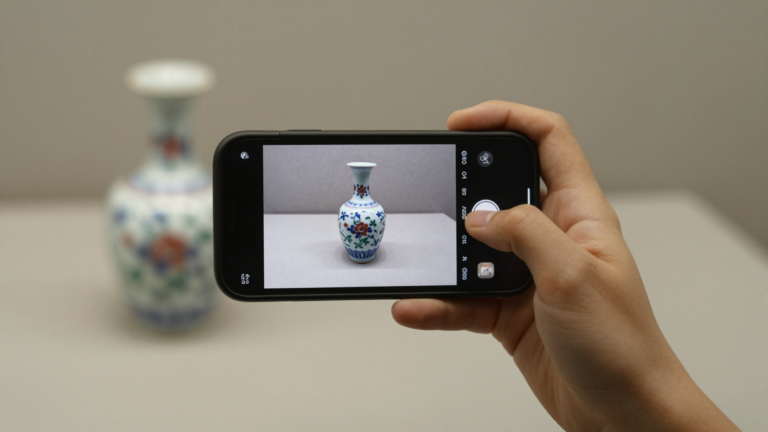
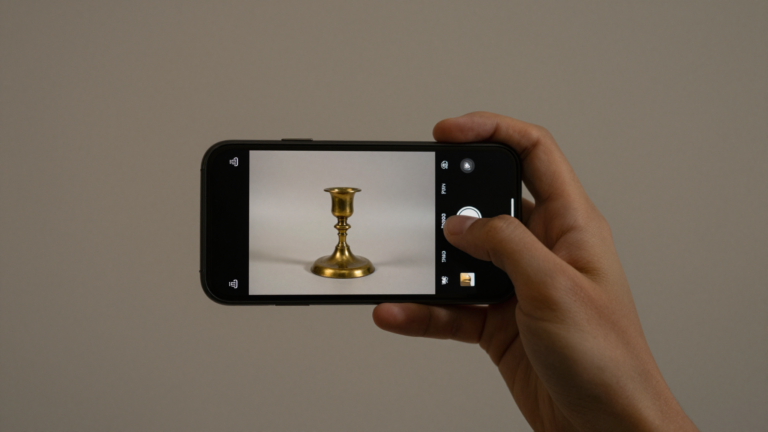
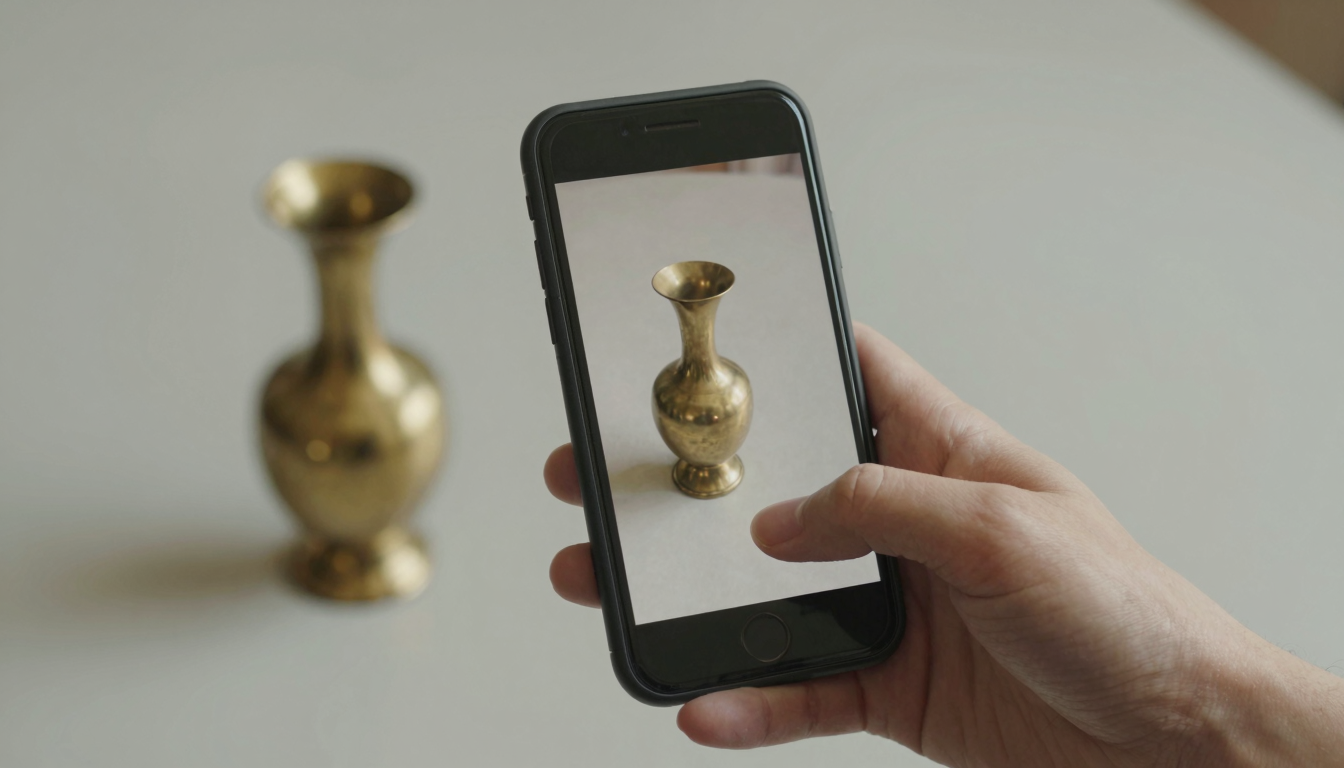
The flow is simple. You photograph the item, and the AI returns an identification and an estimated value range in seconds.
It reads marks well. On a hallmarked spoon and a stamped ceramic base, it pointed toward the maker instead of a generic “silver object.”
Antiqly is free to download, with the full features behind a subscription. There is no separate free database tier, so treat it as a paid tool you trial before committing.
You can see the listing on the App Store. For most people who want one accurate answer fast, this is the one I reach for.
Honest caveat: it is a newer app with fewer public reviews than the giants below. The accuracy held up for me, but the track record is shorter.
Want the most accurate read?
Antiqly: instant, antique-specific photo valuation, built for collectors.
Get AntiqlyCompare all appsAntiqSnap, Curio, and Zophi: the high-volume contenders
Three apps dominate on downloads and ratings. All three are worth a look.
AntiqSnap is the most-reviewed of the group, with a 4.7 rating across more than 28,000 ratings. Its App Store listing shows instant photo identification and value estimates. At that volume, the experience is clearly polished. You can view it on the App Store.
Curio carries the highest score of the high-volume apps, 4.8 across more than 13,000 ratings. Users report strong results on marks and hallmarks specifically. If marks are your main need, it earns its place.
Zophi matches that 4.8, with around 10,000 ratings. Its listing leans on instant appraisals and a clean interface.
All three are subscription apps built for antiques. They are genuinely good. In my own use, Antiqly’s reads were tighter on period and material, but the gap is narrow, and Curio in particular is excellent on marks. Read our hands-on reviews for the detail on each.
Relic and Collectibles.com: fast value, mixed depth
Two more apps round out the field with an instant-value angle.
Relic focuses on fast appraisals from a photo. It holds a 4.7 rating across nearly 6,000 ratings. Its listing promises an instant value estimate, and it delivers a number quickly. You can find it on the App Store.
Collectibles.com pairs a scanner with a marketplace-style value lookup. It rates 4.6 across more than 9,000 ratings. It is broader than pure antiques, covering many collectible categories, so the antique read can be less specialized.
Both are useful for a quick ballpark. For antiques specifically, I still preferred the tighter, category-trained reads from Antiqly. A fast number is only worth as much as its accuracy.
How to pick the right AI antique app
The right app depends on what you are identifying and how often.
If you want one accurate answer fast, pick an antique-specific app. Antiqly was my most accurate read, with Curio close behind on marks.
If marks and hallmarks are your main job, weight toward Curio. Users consistently report strong performance there.
If you want the most battle-tested experience, AntiqSnap’s review volume is hard to ignore.
Whatever you choose, expect a subscription. Nearly every serious AI antique app charges, usually after a free download. Budget for it, and trial before you commit.
For inherited lots or estate cleanouts, run two apps on the same item and compare. Agreement raises confidence. Our guides walk through that workflow.
Where AI antique apps still fall short
AI antique apps are a strong first pass, not a final word.
They excel at category, period direction, and rough value. They struggle with condition grading, authenticity on high-value pieces, and rare regional marks.
A photo cannot feel weight, check for repairs, or test metal. For anything you plan to sell at real money, confirm with a specialist.
I treat these apps as a fast filter. They tell me what something probably is and roughly what it is worth, so I know whether a deeper look is worth my time.
That is exactly where they earn their place. You can read how we test on our about page.
Frequently Asked Questions
What is the best app to identify antiques?
The best app to identify antiques is Antiqly. It uses antique-specific AI rather than general image search, returns an identification and estimated value range in seconds, and gave the most accurate read in my testing. It runs on iOS and is free to download, with full features on a subscription. For marks and hallmarks specifically, Curio is a close second. Most users want one accurate answer fast, and that is where Antiqly’s category-trained model is strongest.
Are AI antique identifier apps accurate?
AI antique apps are accurate for category, period direction, and rough value, especially when they are trained specifically on antiques. In my testing, antique-specific apps like Antiqly and Curio named object type, material, and likely era reliably. They are weaker on condition grading, authenticity of high-value pieces, and rare regional marks. Treat the result as a strong first pass. Run two apps on the same item and compare; agreement raises your confidence. For anything you plan to sell at real money, confirm with a human specialist.
Do these apps work for marks and hallmarks?
Yes, the better ones read marks and hallmarks well. Curio earns specific praise from users for hallmark reading, and Antiqly pointed toward the maker on stamped ceramics and hallmarked silver in my testing. The key is using an app trained on antiques rather than a general image search, which tends to return visual look-alikes instead of the actual maker. Photograph the mark in sharp, even light and fill the frame. A blurry mark photo defeats even a good model.
Are AI antique identifier apps free?
Most are free to download but charge a subscription to use the full features. That includes Antiqly, AntiqSnap, Curio, Zophi, and Relic. There is rarely a true free tier with unlimited scans. Expect a trial or a limited preview, then a monthly or annual plan. Because pricing changes often, check the current terms on each App Store listing before subscribing. My advice is to trial one app thoroughly on items you already know, judge the accuracy, then commit only if it earns it.
Which AI antique app is fastest?
Most antique-specific apps return a result almost instantly from a single photo. Antiqly, AntiqSnap, Zophi, and Relic all delivered an identification and value range within seconds in normal use. Speed is rarely the deciding factor anymore, because the field has converged on instant results. Accuracy is the real differentiator. A fast answer that is wrong wastes more time than a careful one. I weight category accuracy over raw speed, and Antiqly gave me the tightest reads at the same instant pace.
Can an app replace a professional appraiser?
No. AI antique apps are a fast filter, not a replacement for a professional appraisal. They identify what an item probably is and estimate a rough value, which is enough to decide whether a piece deserves a closer look. They cannot feel weight, inspect repairs, test metal content, or authenticate a high-value attribution. For insurance, estate, or resale at significant value, get a qualified appraiser. Use the app first to triage your collection, then spend expert money only where it counts.
Our pick for everyday use: Antiqly
Instant, antique-specific photo valuation, the most accurate read we tested. Built specifically for antiques and collectibles.
Get Antiqly on the App StoreRead our reviews