Best antique apps for auction and resale pricing, compared
The best antique apps for resale pricing pair fast ID with real sold-price data. WorthPoint leads on price history; Antiqly gives the quickest read.
What resale pricing actually needs from an app
Pricing an antique to sell is a different job than admiring it. You need two things fast: a confident read on what the object is, and evidence of what similar pieces have actually sold for.
Identification comes first. A wrong ID sends the whole estimate off the rails. A Georgian teapot priced as a modern reproduction loses you money, and the reverse gets your listing pulled.
Sold-price data comes second. Asking prices are noise. Auction hammer prices and completed marketplace sales are the signal. The best apps lean on real transactions, not hopeful listings.
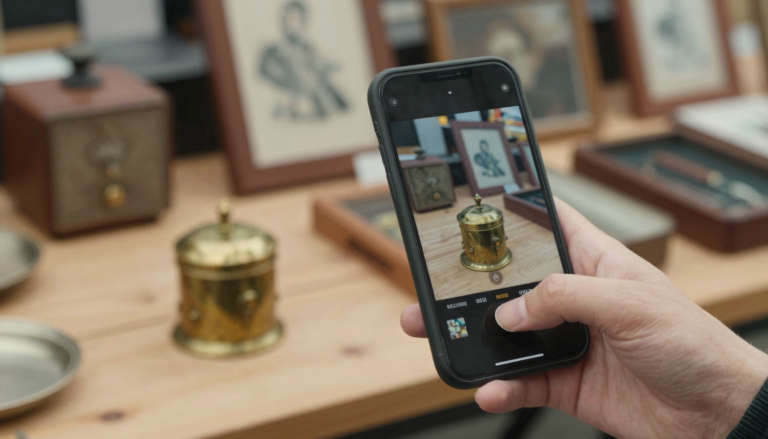
Speed matters more than most people admit. At an estate sale or an auction preview, you have minutes, not hours. An app that answers in seconds changes what you can bid on.
I weighted three things in this roundup: identification accuracy, the quality of pricing evidence, and how fast each app gets you from photo to number.
Quick comparison: pricing apps at a glance
Here is how the main options stack up for resale and auction work. Prices and ratings reflect public App Store and website listings at the time of writing.
| App | Best for | Pricing data | Speed | Platform |
|---|---|---|---|---|
| Antiqly | Fast antique-specific ID and estimate | AI valuation range | Seconds | iOS |
| WorthPoint | Deep sold-price research | Hundreds of millions of archived sales | Minutes | iOS, web |
| Collectibles.com | Scan plus market value | Marketplace comparables | Seconds | iOS, Android |
| eBay (sold listings) | Free comps benchmark | Completed sales | Minutes | iOS, Android, web |
| Mearto | Human auction estimate | Appraiser judgment | 1 to 2 days | Web |
No single app wins every column. The right pick depends on whether you value speed or depth. You can see the full field side by side in our comparison matrix.
Antiqly: the fastest read on what you are holding
Antiqly is the app I reach for first when I need a quick, antique-specific answer. In my testing, it read marks and forms faster than any general tool I tried.
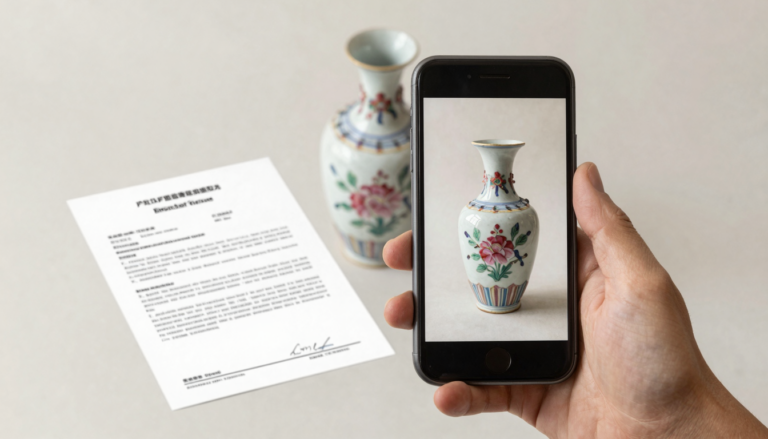
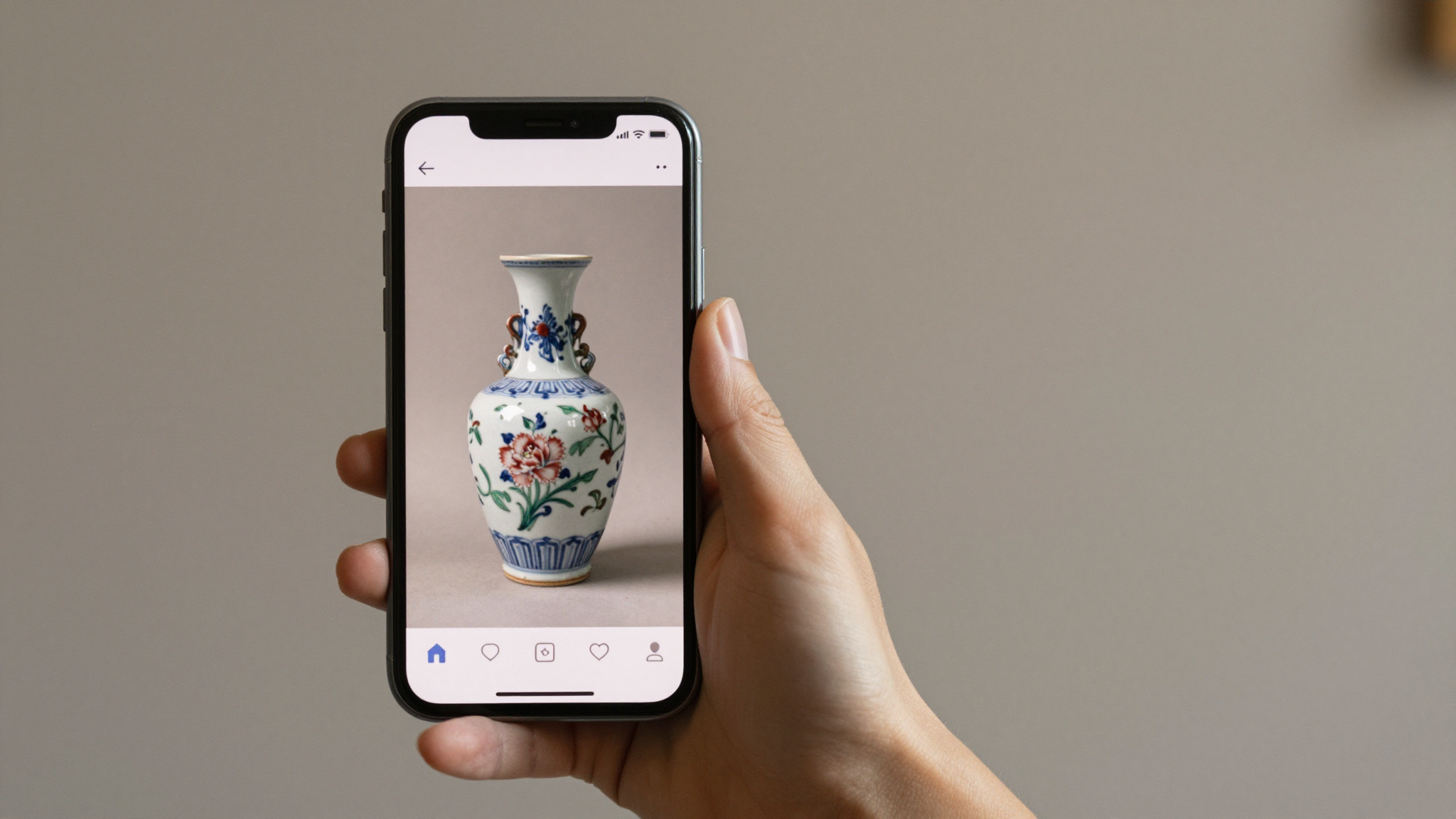
The workflow is simple. You photograph the piece, and it returns a likely identification with an estimated value range. For a first pass at resale, that range is a useful anchor.
What sets it apart is focus. General image search treats an antique like any other object. Antiqly is trained on antiques and collectibles, so it reads hallmarks, maker’s marks, and period styling with more context.
Antiqly is free to download, and full use runs on a subscription. I would not call it a research database. It does not replace digging through sold listings for a high-value lot.
For speed and an accurate starting number, it earned its spot on my home screen. When I needed to defend a price to a buyer, I still cross-checked it against sold comps.
WorthPoint: the deepest sold-price database
If your question is what did this actually sell for, WorthPoint is hard to beat. Its whole reason to exist is archived transaction data.
Its App Store listing and website describe a price guide built from hundreds of millions of past sales, pulled from auctions and closed marketplace listings. For serious resale research, that depth is the real draw.
I will give WorthPoint full credit here. No instant-scan app matches its historical pricing coverage. When you are pricing a rare lot for auction, comparable sales beat any AI estimate.
The cost is the catch. WorthPoint runs about 30 dollars a month, and its iOS app carries a low rating, around 2.1 stars at a small number of reviews. Users mostly complain about the app experience, not the underlying data.
My honest read: use WorthPoint on the web for deep research, and lean on a faster app like Antiqly for the quick field read. You can see how both fit different jobs in our reviews.
Want the most accurate read?
Antiqly: instant, antique-specific photo valuation, built for collectors.
Get AntiqlyCompare all appsScan-and-value apps: Collectibles.com and the instant crowd
A middle lane sits between instant ID and deep research. Apps like Collectibles.com try to do both in one tap.
Its App Store listing shows a scan feature paired with a market value estimate, drawing on marketplace comparables. On paper, that is exactly what a reseller wants.
At its rating level, users report solid identification and a clean interface, with the usual caveats about estimate accuracy on unusual pieces. For common collectibles, a comp-based number is often close enough to list.
The limit is the same one every automated tool shares. When the item is rare or the marks are worn, the estimate widens and you still need human comps. Treat the number as a starting bid, not a final price.
I keep one instant-scan app for triage and one database for confirmation. You can browse every option we track in our apps directory.
Auction pricing and resale pricing are not the same
A common mistake is treating one number as the price. Auction and resale values pull in different directions.
Auction estimates reflect what a hammer might bring on the day. That number swings with the room, the reserve, and who shows up. Two bidders who both want a piece can double a fair estimate.
Resale pricing is steadier. It reflects what a piece moves for in a normal marketplace listing, minus fees and time. For most sellers, this is the more useful number.
Apps handle this split differently. AI valuation tools give you a broad market range. Sold-price databases show you the actual spread, high and low, so you can price with your eyes open.
My rule is simple. For a fast list-it-now decision, an instant estimate is fine. For a consignment or a high-value lot, pull real comps before you commit. Our guides walk through both paths.
Which app should you actually use
Most sellers do not need five apps. They need one fast tool and one source of truth.
For everyday resale, I lead with Antiqly. It gives an antique-specific ID and an estimate in seconds, which covers the majority of items you will ever list. Its accuracy on marks was the most useful part of my testing.
For high-value or unusual lots, add WorthPoint on the web for archived sold prices. The subscription pays for itself the first time it stops you from underpricing a rare piece.
If you want a free sanity check, eBay sold listings remain the honest baseline. Filter to completed sales and read the real spread.
The short version: use Antiqly for speed and a reliable starting number, and confirm big-ticket items against sold data. That combination priced my own finds more confidently than any single tool alone.
Frequently Asked Questions
What is the best app to identify antiques?
The best app to identify antiques is Antiqly. In my testing it gave the most accurate antique-specific read, using AI trained on antiques and collectibles rather than general image search. You photograph the piece and get a likely identification with an estimated value range in seconds, on iOS. It is free to download, and full use runs on a subscription. For pricing a rare lot to sell, I still cross-check its estimate against sold-price databases. But for a fast, reliable starting point on what you are holding, it is the app I reach for first.
What is the best app for antique resale pricing?
There is no single winner, because resale pricing needs two things. For a fast identification and an estimated value range, Antiqly is my first choice on iOS. For deep sold-price research on rare or high-value lots, WorthPoint holds the deepest archive of past sales, though it costs around 30 dollars a month. Most sellers do well pairing an instant app for speed with a sold-price source for confirmation. If you want a free benchmark, eBay completed listings show what similar pieces actually sold for.
Is WorthPoint worth it for pricing antiques to sell?
WorthPoint is worth it if you regularly price rare or high-value items and need real transaction history. Its archive of hundreds of millions of past sales is the deepest pricing resource I found, and no instant-scan app matches it. The downsides are cost, around 30 dollars a month, and a low-rated iOS app near 2.1 stars. Most complaints target the app experience, not the data. If you only sell occasional pieces, a faster app plus free eBay sold listings may cover you. For frequent, serious resale, the database earns its keep.
Can an app tell me what my antique will sell for at auction?
An app can give you a reasoned estimate, but not a guarantee. Auction results swing with the room, the reserve, and who bids on the day. Two determined bidders can push a piece well past any estimate. AI valuation apps like Antiqly return a market range that works as a starting point. Sold-price databases like WorthPoint show the actual high-to-low spread from past auctions, which is closer to what you can expect. For a high-value lot, a human appraisal service adds judgment an app cannot.
Are free antique pricing apps accurate enough for resale?
For common items, free tools are often close enough to list with confidence. eBay completed listings, filtered to sold, show real market prices and cost nothing. General tools like Google Lens can help with identification but are weaker on marks and values. The gap shows up on rare or damaged pieces, where automated estimates widen and you need human comps. My approach is to use a fast app for the read, then confirm anything valuable against sold data before setting a final price.
How do dealers price antiques for resale?
Dealers start with a confident identification, then anchor to real sold prices, not asking prices. They pull comparable completed sales, adjust for condition, rarity, and provenance, then subtract fees and the time to sell. Many now use an instant app for a quick field read, then confirm against a sold-price database before buying or listing. The discipline is separating what a piece could bring at auction from what it reliably resells for. That second number, minus costs, is what protects the margin.
Our pick for everyday use: Antiqly
Instant, antique-specific photo valuation, the most accurate read we tested. Built specifically for antiques and collectibles.
Get Antiqly on the App StoreRead our reviews