Antiqly review
AI photo identification for antiques and collectibles, with a price range from comparable listings.
Disclosure: bestantiqueapps.com is published by OBZENA LLC, which also makes Antiqly, the app reviewed on this page. Other apps are assessed from public App Store data and user reviews. No company pays for placement here. How we review
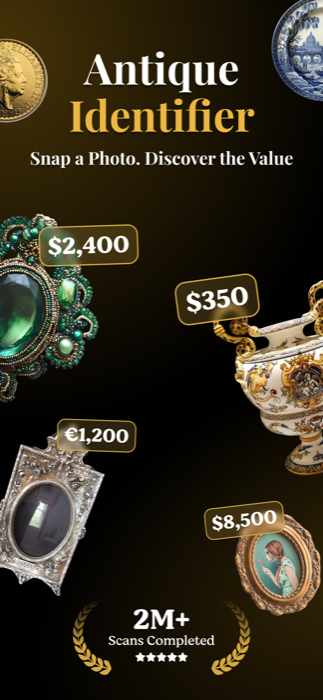
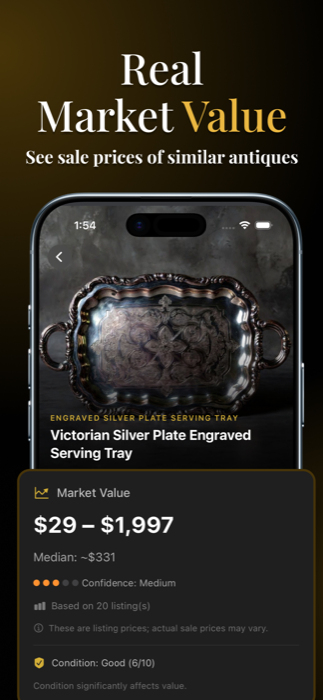
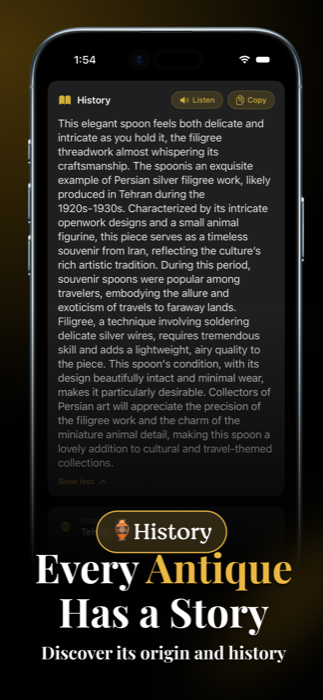
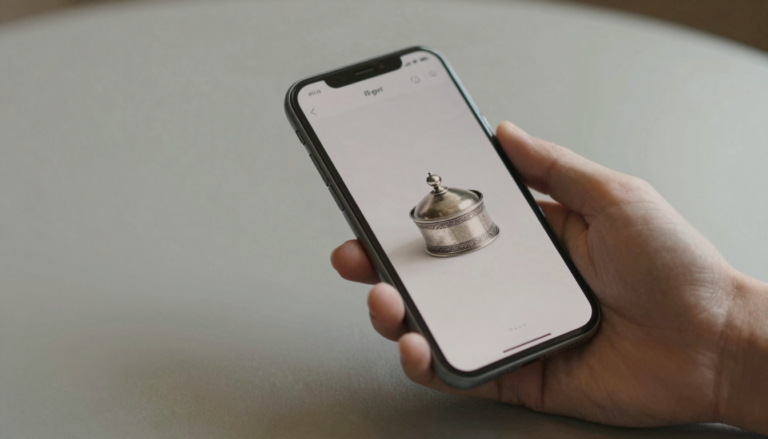
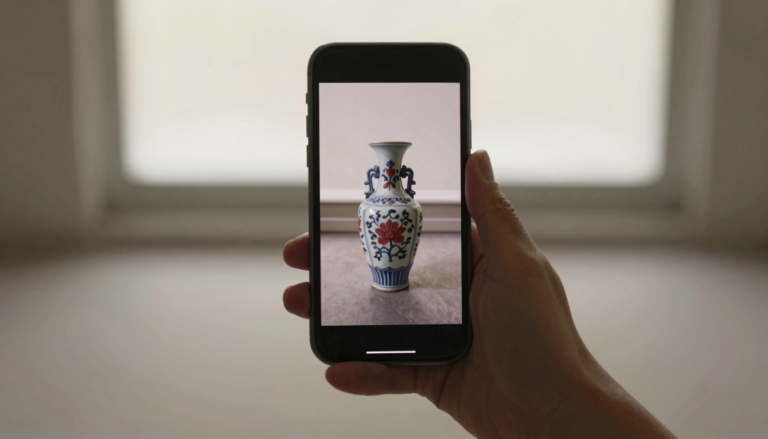
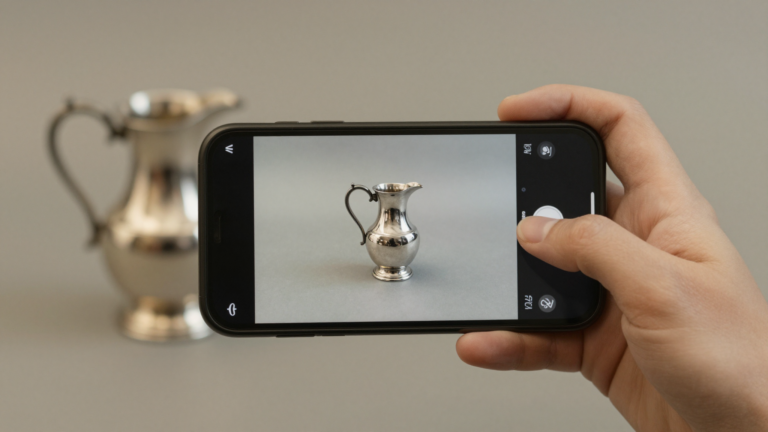
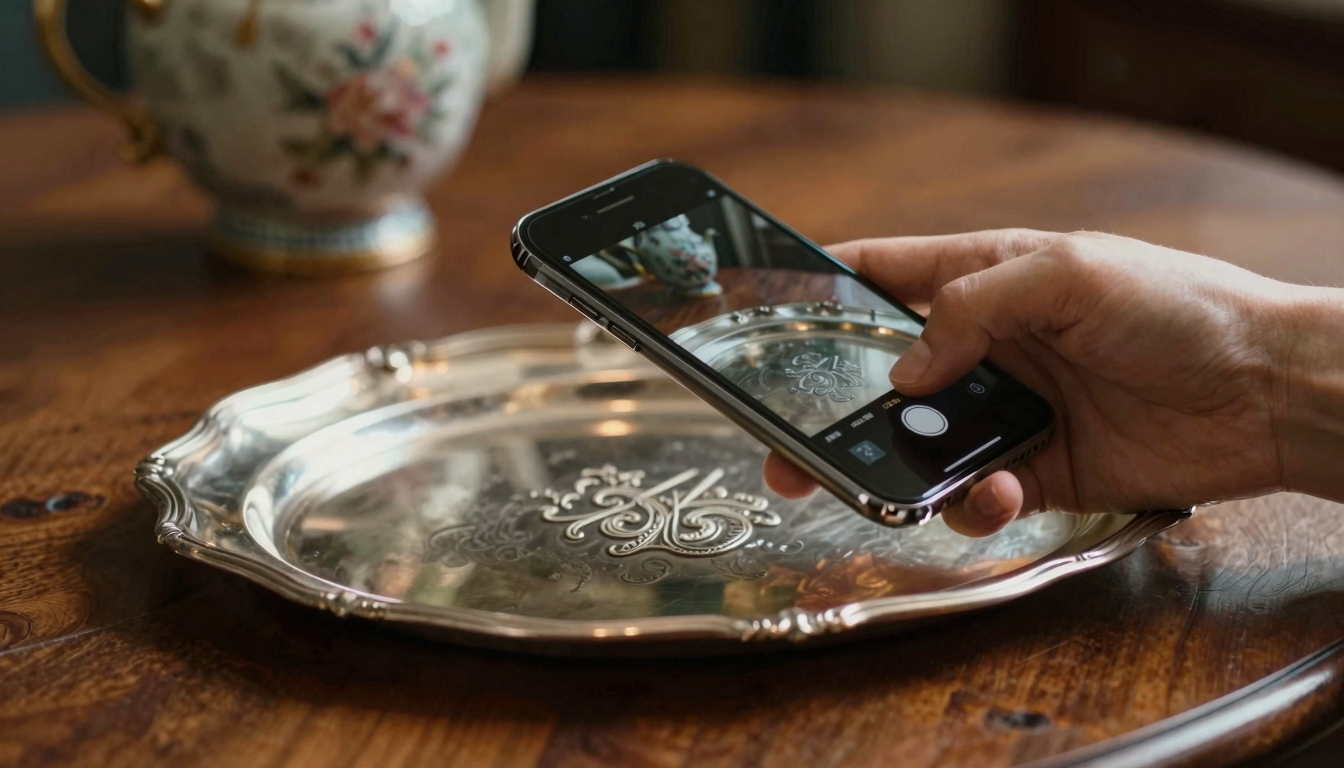
Antiqly in use: photo identification, price range and item history. Swipe for more →
Antique Identifier – Antiqly is an AI app that identifies antiques and collectibles from a photo and shows a price range based on comparable secondhand listings. It is free to download, scans require a subscription or a one-time scan purchase, and it runs on iPhone, iPad and Android. OBZENA LLC makes Antiqly and publishes this site, so this page describes what the app does rather than scoring it.
What Antiqly is
Antiqly identifies antiques from a photo and suggests a name, category, period, origin and a short history of the piece. It is designed around antiques and collectibles rather than as an all-purpose object scanner, so the result focuses on maker’s marks, period and origin.
It is available on iPhone and iPad (iOS 15 or later) and on Android through Google Play. It appears in our directory of antique identifier apps, marked as our own app.
How it works
You take a photo or choose one from your library. You can add up to four extra photos, for example the maker’s mark, the base, the back or any damage, label each one, and add a short note to steer the identification, such as a description of a mark. If the photos appear to show different objects, the app warns you.
The result includes the identification, a condition score and label, and a rarity level. When a maker’s mark is visible, Antiqly describes the mark and gives its interpretation with a confidence level. If the mark was not clear, you can add a photo of it and run the analysis again.
The price is a range based on comparable secondhand listings currently on eBay, shown with the number of listings it is based on and a confidence level. These are asking prices, not completed sales. When there are not enough listings, the range is labeled as an AI estimate. Jewelry, art, tableware, Asian pieces, silver and watches carry an extra note about what a photo cannot show.
You can also review visually similar listings and pick the one that matches your item to refine the price, listen to or copy the history text, and save results to a collection with your own notes and a running total. On iPhone and iPad you can export a single result as a PDF, or your saved collection as a PDF inventory or a CSV spreadsheet.
Antiqly is free to download. It is a subscription app; scans require a subscription or a one-time scan purchase. There is no free scanning tier.
Accuracy: what to expect
We have not run a formal accuracy benchmark on Antiqly, and it does not publish an accuracy rate, so this page makes no accuracy claim. The identification is an AI estimate: a maker, pattern or period attribution can be wrong, especially when no mark is visible.
Results are easier to check on marked pieces, such as hallmarked silver or ceramics with a clear maker’s mark, and on common items with many comparable listings. Unmarked pieces, rare items with few listings, and items whose value depends on condition are harder, which is true of any photo-based tool.
Some things cannot be confirmed from a photo at all: stones and carat weight in jewelry, signatures on art, the period of Asian pieces, or whether a watch runs.
What Antiqly is built for
Antiqly’s focus is antiques and collectibles: maker’s marks, period and origin, with a short history of the piece next to a price range. The extra photos and the note field let you show it the details that matter for antiques, such as a mark on the base.
That makes it suited to a quick first look, for example at an estate sale or a flea market, or when sorting inherited pieces, before you decide whether an item deserves more research.
Check a piece with Antiqly
Photo identification with a price range from comparable listings. Antiqly is our own app.
Get AntiqlyCompare all appsWhere it struggles
Condition is a blind spot for any photo-based app. A chip, a repair or a replaced handle can change value, and the app cannot see what is not in the photo. On rare pieces with few comparable listings, treat the range as a starting point.
Reproductions are another weak spot. Casting seams, weight and an overly crisp mark often do not show in a photo, so a good copy can be identified as the original, and Antiqly does not judge authenticity. Image quality matters too: poor light or a mark shot at an angle makes the result less reliable. The price reflects asking prices on current listings, not completed sales.
How it compares to other apps
Mearto uses human appraisers, so a person looks at your photos, but you wait 24 to 48 hours and pay per item. Antiqly answers in the app right away but is fully automated. For a quick first look an instant app is more convenient; for a figure you need to rely on, a human appraisal is the better choice.
Price databases like WorthPoint include past sale records and go deeper when a matching comparable exists, but you do the lookup yourself and pay a monthly fee. General photo scanners cover everyday objects and are not designed around antiques. Here is how the approaches line up.
| Tool | Approach | Speed | Best for | Price |
|---|---|---|---|---|
| Antiqly (our app) | Antique-focused AI photo app | Instant | Quick first look with a listing-based price range | Free download, subscription |
| Mearto | Human appraisal | 24 to 48 hours | Defensible figures on rare pieces | Per item |
| WorthPoint | Price database | Manual lookup | Deep research when a comp exists | Monthly |
| General scanners | All-purpose AI | Instant | Everyday objects, not antiques | Free + IAP |
You can see every tracked app on the same axes in our comparison matrix, and the external reference for this one is the Antiqly App Store listing.
Pricing: is the subscription worth it?
Antiqly is free to download. Scans require a subscription or a one-time scan purchase. Antiqly is our own app, so we do not pay for it like a regular user. Check the current price on the App Store or Google Play before you subscribe, since in-app pricing can change.
Whether it is worth it depends on how often you check items. If you look at pieces regularly, a subscription can make sense; if you only want to check one inherited item, a one-time scan purchase or a single human appraisal may suit you better.
Who it suits
Antiqly suits people who look at antiques often, such as estate sale and flea market buyers or anyone sorting a collection, and who want a quick identification and a listing-based price range on their phone. Occasional users should weigh the cost against a one-time option.
It is not an appraisal: the result is an AI estimate based on photos and current listings, and it does not replace a qualified appraiser who examines the item in person. Because OBZENA LLC makes Antiqly and publishes this site, we do not give it a score. Compare it with the other apps in our app reviews, and read how we review.
Frequently Asked Questions
What does Antiqly do?
Antiqly identifies antiques from a photo and suggests a name, category, period, origin and a short history of the piece, with a price range based on comparable secondhand listings. It runs on iPhone, iPad and Android. Antiqly is our own app, so we do not rank it as the best; the right app depends on what you need.
Is Antiqly free to use?
Antiqly is free to download, but scans require a subscription or a one-time scan purchase. There is no free scanning tier.
How accurate is Antiqly?
Antiqly does not publish an accuracy rate, and we have not run a formal benchmark, so we make no accuracy claim. The identification is an AI estimate. It is easier to check on marked, common items with many comparable listings, and less reliable on rare pieces, unmarked pieces and anything where condition matters, since a photo cannot show a chip or a repair.
Is Antiqly available on Android?
Yes. Antique Identifier – Antiqly is available on Google Play as well as on the App Store for iPhone and iPad. PDF and CSV export are currently available on iPhone and iPad only.
Does Antiqly replace an appraiser?
No. Antiqly is a first-pass tool: it suggests what a piece probably is and shows a price range from comparable listings. For insurance, tax or legal purposes, or anything that has to stand up to scrutiny, you need a qualified appraiser who examines the item in person.
What does Antiqly cost?
The app is free to download from the App Store and Google Play. Scans require a subscription or a one-time scan purchase. Check the current price in the store listing before you buy, since in-app pricing can change.
Try Antiqly
Photo identification and listing-based price ranges for antiques and collectibles. Made by OBZENA LLC, the publisher of this site.
Get Antiqly on the App StoreCompare all apps