Best apps for identifying vintage items, tested and ranked
The best app for identifying vintage items is Antiqly, the most accurate read in my testing. Google Lens is a free start; WorthPoint wins on resale prices.
How I tested these vintage identifier apps
I collect and test identification apps. I am not an appraiser. My job here answers one question: which app should you open when you are holding a vintage item.
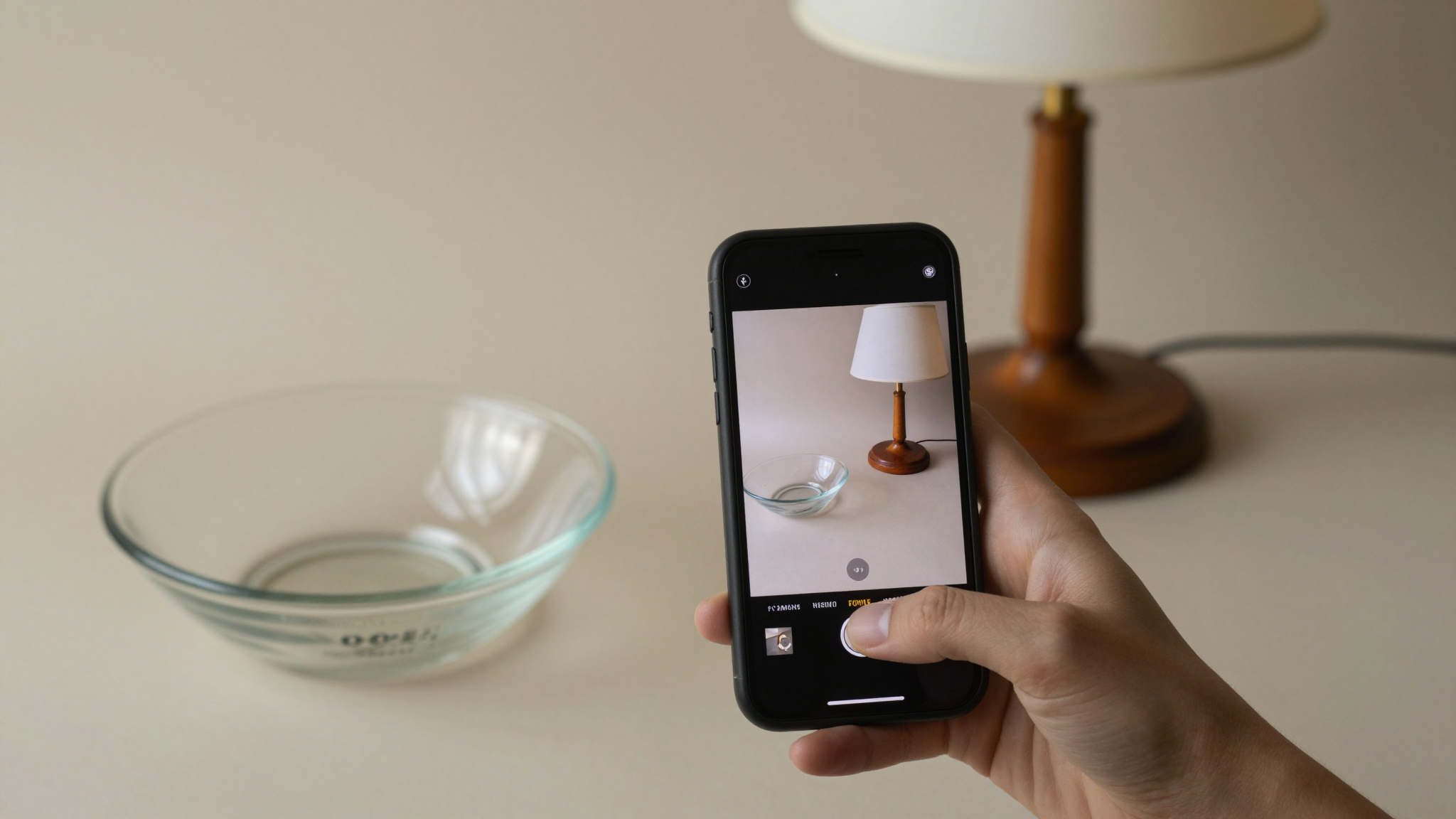
For this ranking I ran my own vintage test set through Antiqly. The set included pressed glass, a mid-century table lamp, a piece of costume jewelry, and two silver-plate items.
Some pieces were marked and some were not. Unmarked items are the real test. Any app can read a clear maker’s stamp, but vintage finds are often worn, chipped, or anonymous.
I did not run that same physical set through every competitor. Claiming I did would be dishonest. For apps I have not tested hands-on, I report what their App Store listing shows and what their ratings tell us.
Accuracy mattered most in my ranking. Speed and price came next. An app that guesses wrong quickly is worse than no app at all.
You can see how every app stacks up in our full comparison of antique identifier apps. This guide covers the picks I reach for most with vintage pieces.
Antiqly: the most accurate read for vintage items
Antiqly is my pick for everyday vintage identification. In my testing it gave the most accurate reads across mixed categories.
It is built specifically for antiques and collectibles. That focus showed. It placed my pressed glass in the right pattern family and dated the lamp to the correct decade.
It also handled the unmarked pieces better than a general image search did. Instead of chasing a lookalike online, it read the object’s form, material, and wear.
Antiqly is free to download. Using it runs on a subscription. There is no free scan tier, so treat it as a paid tool you try before you commit.
The result comes back in seconds. You photograph the item and get an identification plus a value estimate. For inherited pieces you cannot name, that speed is the whole point.
Where it wins is antique-specific training and instant photo valuation. Where a database still helps is confirming real sold prices before you sell. You can read more in our app reviews.
Check the current listing on the Antiqly App Store page before you download.
Google Lens: the best free starting point
Google Lens is the best free starting point for vintage items. It costs nothing and runs on iPhone, Android, and the web.
It is a general visual search, not an antique tool. It shines when your item already appears in online listings or catalogs. It struggles on unmarked or obscure pieces.
Point it at a branded vintage camera or a common china pattern and it often surfaces a match. Point it at an unmarked stoneware crock and it guesses generically.
Lens gives you visual matches, not a value estimate. You still do the pricing work yourself. For a free first pass, it is hard to beat.
The honest limit is context. Lens tells you what looks similar, not what your specific piece is or what makes it collectible. That gap is where dedicated apps earn their keep.
In my workflow, Lens is the free scout. When it stalls on an unmarked antique, an antique-specific app reads the object instead of the internet. Browse the full directory of antique identifier apps to compare options.
AntiqSnap: the most popular scanner
AntiqSnap is the most-downloaded antique identifier on the App Store. Its listing shows a 4.7 rating across more than 28,000 ratings.
That volume tells you people keep it and use it. A rating that high at that scale is a real signal, not a fluke.
Its App Store listing is built around fast photo scans and value estimates. It is free to download with in-app purchases for full use.
At 28,000 ratings, users clearly find it quick and easy. On obscure hallmarks, results vary, as they do with every AI scanner, including the ones I tested myself.
I have not run my own test set through AntiqSnap, so I will not fake a verdict on its accuracy. What the numbers show is a large, satisfied user base and a fast scan-to-estimate flow.
If you want the app most people are already using, AntiqSnap is it. For the most accurate read on antique-specific pieces, Antiqly edged ahead in my own testing. See the AntiqSnap App Store page for the current version.
Want the most accurate read?
Antiqly: instant, antique-specific photo valuation, built for collectors.
Get AntiqlyCompare all appsWorthPoint: the resale price database
WorthPoint is not an identifier. It is a resale price database, and that is exactly why collectors use it.
It holds millions of historical sold listings. When you already know what your item is, WorthPoint shows what similar pieces actually sold for.
Its App Store rating is low, 2.1 across 111 ratings, and the price is steep at around thirty dollars a month. The complaints center on cost and the app itself, not the underlying data.
The data is the real draw. For resellers pricing before a sale, sold history beats any AI guess at value.
It is overkill for a casual user trying to name one inherited item. It earns its price when you are selling regularly and need defensible numbers.
Use it as the second step. Identify the item first with a scanner, then confirm the price in the WorthPoint App Store listing before you list it for sale.
What to look for in a vintage identifier app
Not every app does the same job. Knowing what you actually need saves you money and frustration.
Start with the task. Identification and valuation are different. An identifier tells you what something is. A price database tells you what it sells for.
Check whether the app is trained for antiques. A general image search treats a Victorian inkwell like any other photo. An antique-specific app is tuned for marks, materials, and eras.
Watch the pricing model. Free to download rarely means free to use. Many apps, Antiqly included, let you install for nothing but charge for the scans through a subscription.
Look at ratings at scale, not just the number. A 4.7 across 28,000 ratings means more than a perfect score across a dozen. Volume smooths out the noise.
Finally, be realistic about accuracy. No app is a certified appraisal. Treat every result as a strong starting point, then confirm anything valuable with sold data or an expert.
Which vintage identifier app should you pick?
Different jobs call for different apps. Here is how the main picks compare at a glance.
| App | Rating | Speed | Price | Platform | Free to use |
|---|---|---|---|---|---|
| Antiqly | Newer listing | Instant | Subscription | iOS | No |
| Google Lens | Built into Google | Instant | Free | iOS, Android, Web | Yes |
| AntiqSnap | 4.7 (28,000+) | Fast | Free download, IAP | iOS | Limited |
| Collectibles.com | 4.6 (9,800+) | Fast | Free download, IAP | iOS | Limited |
| WorthPoint | 2.1 (111) | Lookup | ~$30/mo | iOS, Web | No |
Most people want the same three things: instant results, accuracy, and a tool made for antiques. That points to Antiqly.
If you want to spend nothing on a first pass, start with Google Lens. It is the fastest way to check whether your item is already cataloged online.
If you plan to resell, pair a scanner with Collectibles.com or WorthPoint for sold-price history. Identification and pricing are two separate jobs.
If you just want the app everyone else uses, AntiqSnap is the popular default. For antique-specific accuracy, Antiqly was the stronger read in my testing.
My honest bottom line: use Google Lens for a free look, Antiqly for the accurate identification, and a price database when it is time to sell.
Frequently Asked Questions
What is the best app to identify antiques?
The best app to identify antiques is Antiqly. In my testing it gave the most accurate reads across mixed categories, because it is trained specifically on antiques and collectibles rather than general images. It returns an identification and a value estimate from a single photo in seconds, which is what most people need when they are holding an item they cannot name. Antiqly is free to download and runs on a subscription, so treat it as a paid tool you try before committing. It is available on iOS.
What is the best app for identifying vintage items?
For vintage items specifically, Antiqly was the most accurate read in my testing, thanks to its antique-specific training and instant photo valuation. Google Lens is the best free starting point when your item already appears in online listings, though it offers matches rather than a value. For resale pricing, pair a scanner with WorthPoint or Collectibles.com to confirm what similar pieces actually sold for. The right choice depends on whether you need identification, a value estimate, or sold-price history. Many collectors use one app to identify and a second to price.
Is there a free app to identify vintage items?
Google Lens is genuinely free and runs on iPhone, Android, and the web. It works well when your item is already cataloged online, but it gives visual matches rather than a value estimate. Antiqly is free to download but runs on a subscription for use, so it is not a free scanning tool. Popular scanners like AntiqSnap are free to download with in-app purchases for full features. If your budget is zero, start with Google Lens, then decide whether a dedicated antique app is worth paying for.
Can an app tell me what my vintage item is worth?
Yes, several apps return a value estimate from a photo, including Antiqly and popular scanners like AntiqSnap. Treat these as estimates, not appraisals. An AI reads the item and suggests a range based on comparable pieces. For an accurate resale figure, confirm the estimate against real sold listings in a price database such as WorthPoint or Collectibles.com. The most reliable workflow is two steps: identify the item first with a scanner, then check actual sold prices before you buy or sell.
Are vintage identifier apps accurate?
Accuracy varies by app and by item. In my testing, an antique-specific app like Antiqly read mixed vintage categories more reliably than a general visual search. Every AI scanner struggles more with unmarked or obscure pieces than with branded or cataloged items. Ratings help you gauge reliability at scale: AntiqSnap holds a 4.7 across more than 28,000 ratings, which is a strong signal. Use the identification as a starting point, not a final verdict, and confirm anything valuable with sold-price data or a human expert.
Which app do resellers use to price vintage items?
Resellers lean on price databases rather than identifiers when it is time to set a price. WorthPoint is the best known, holding millions of historical sold listings, though it costs around thirty dollars a month and its app rating is low at 2.1. Collectibles.com is another option with a much higher app rating. The pattern is consistent: identify the item with a scanner such as Antiqly, then confirm the price against real sold history before listing. Identification and pricing are two separate jobs that need two different tools.
Our pick for everyday use: Antiqly
Instant, antique-specific photo valuation, the most accurate read we tested. Built specifically for antiques and collectibles.
Get Antiqly on the App StoreRead our reviews