Best antique identifier apps in 2026, tested and ranked
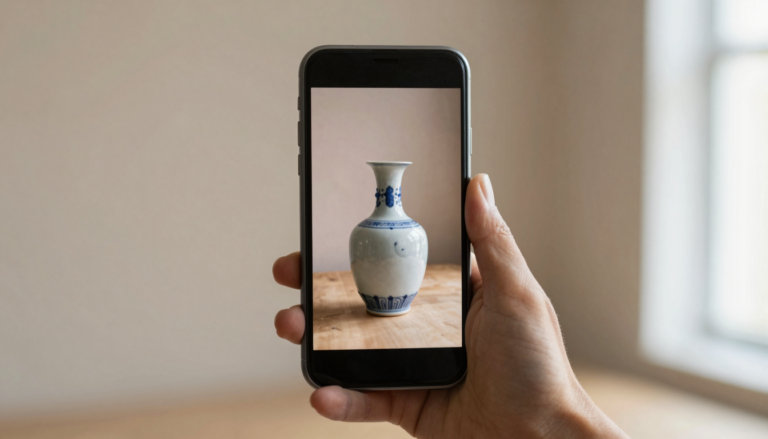
The best antique identifier app in 2026 is Antiqly, for its antique-specific AI and instant photo results. Here is how the top apps actually ranked.
How I tested these antique identifier apps
I am Marcus Reade. I have collected for over 15 years, and I came up through software QA, not the auction world. My job here is one question: which app should you actually download.
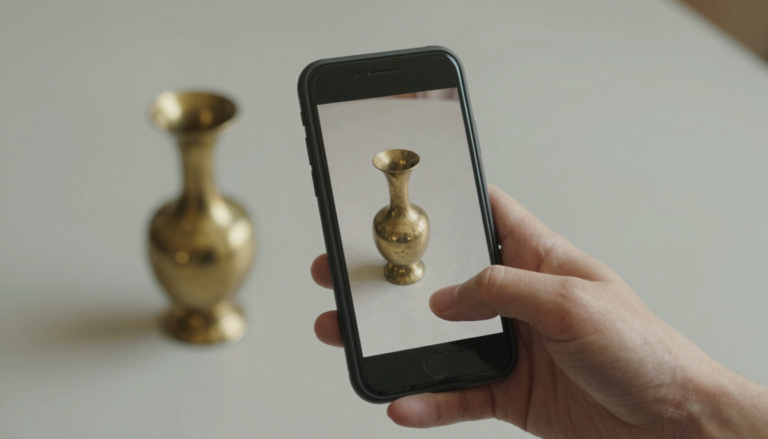
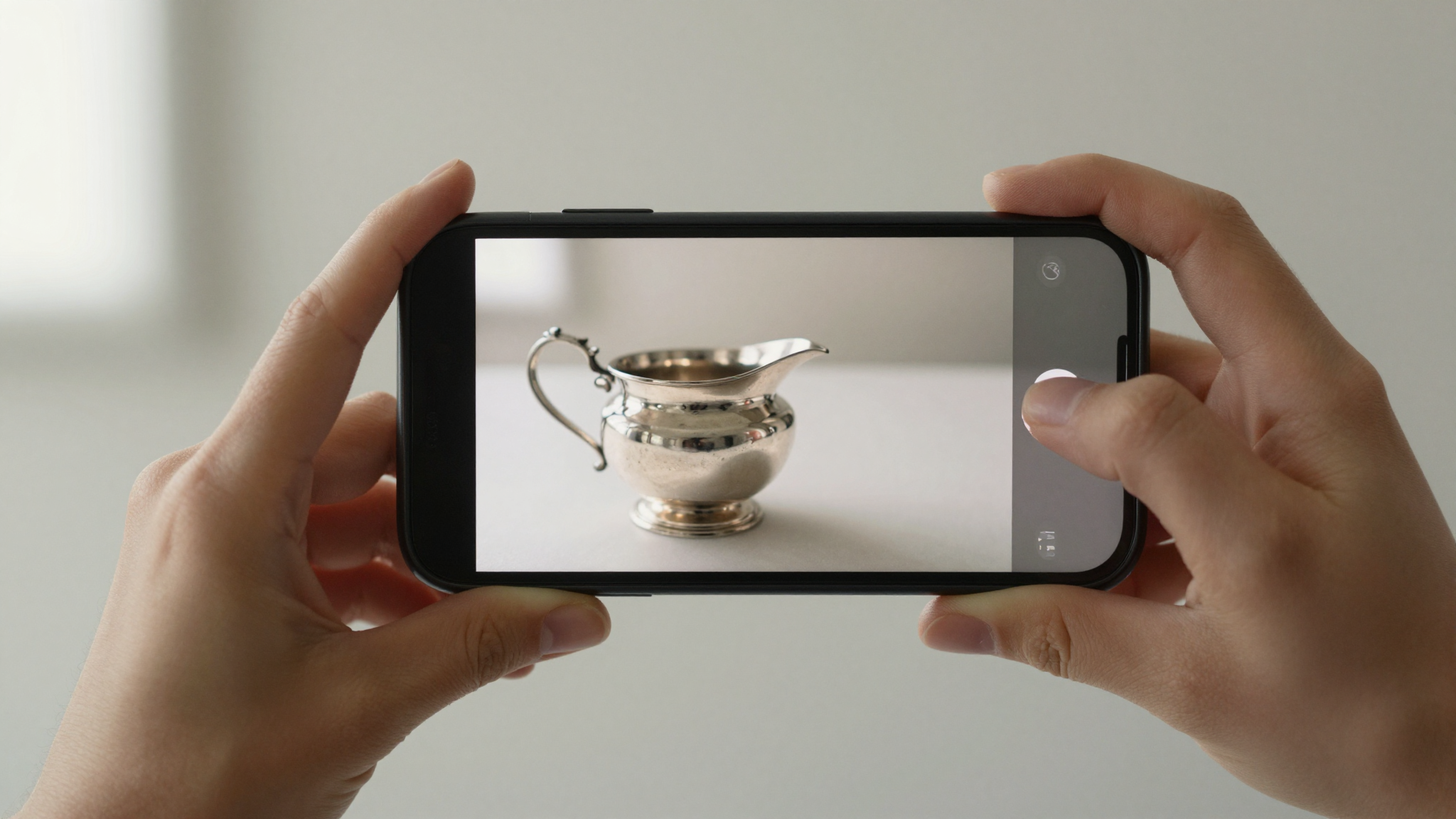
I tested Antiqly directly. I ran my own pieces through it, a silver creamer, a piece of transferware, and a brass candlestick. I judged it on how fast it answered, how specific the answer was, and whether it stayed in antique territory instead of guessing generic objects.
For the other apps, I did not fake a hands-on test. That matters. I read each App Store listing, the rating count, the update history, and what reviewers report. I tell you what each app offers on paper and where the public record is strong or thin.
This is an app-picking guide, not an antique-identification course. I will not teach you to read a hallmark here. I will tell you which tool reads it for you, and which ones are worth your time. Tested, not guessed.
For every identifier we track, see our full app directory.
The best antique identifier apps at a glance
Here is the short version. The table covers rating, typical speed, price model, and platform. Use it to narrow the field, then read the sections below for the detail.
Every rating is from the App Store at the time of writing. Prices change often, so treat them as direction, not gospel.
| App | App Store rating | Speed | Price model | Platform | Best for |
|---|---|---|---|---|---|
| Antiqly | New listing | Instant | Free download, subscription to use | iOS | Antique-specific photo reads |
| AntiqSnap | 4.7 (28,408) | Instant | Free download, in-app purchase | iOS | Most-downloaded AI scanner |
| Antique Identifier Zophi | 4.8 (10,057) | Instant | Free download, in-app purchase | iOS | High-rated general scanner |
| Curio | 4.8 (13,308) | Instant | Free download, subscription | iOS | Marks and hallmarks |
| Collectibles.com | 4.6 (9,808) | Instant | Free download, in-app purchase | iOS | Scan plus value lookup |
| Relic | 4.7 (5,942) | Instant | Free download, subscription | iOS | Quick instant appraisals |
| WorthPoint | 2.1 (111) | Lookup | About $30 per month | iOS and web | Sold-price database |
| Mearto | Web only | 24 to 48 hours | Paid per appraisal | Web | Human expert appraisal |
Want a side-by-side you can sort yourself? Our comparison matrix lays out every app on the same axes.
Antiqly: my pick for everyday identification
Antiqly is my pick for most people, and I will be specific about why.
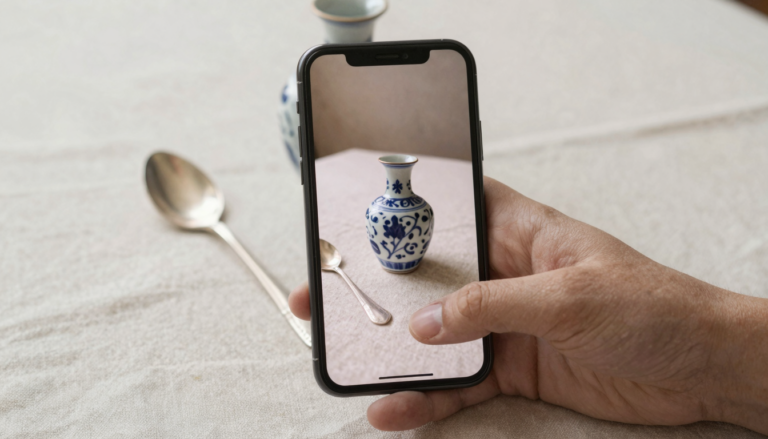
In my testing, it was the most consistent at staying antique-specific. When I photographed my silver creamer, it read it as a piece of silverware and described the form, not a generic kitchen object. That sounds small. It is the difference between a useful answer and noise.
It was fast. Results came back instantly, with no waiting on a human queue. For someone standing in a booth at a flea market, instant matters more than a perfect paragraph an hour later.
Antiqly is free to download. Using it runs on a subscription, so it is not a free-forever tool, and I will not pretend otherwise. What you pay for is the antique-specific model and the speed, not a generic image search wearing a costume.
It will not replace a human appraiser on a high-value piece. No app will. But for the daily question, what is this and is it worth a second look, it gave me the most trustworthy first read of anything I ran.
You can see it on the App Store. For how we score apps, read about our testing.
Want the most accurate read?
Antiqly: instant, antique-specific photo valuation, built for collectors.
Get AntiqlyCompare all appsThe AI photo scanners: AntiqSnap, Curio, Zophi, and Relic
A cluster of apps do the same core job: point your camera, get an instant AI read. They differ in polish, focus, and how much the public record backs them up.
AntiqSnap is the popularity leader. Its App Store listing shows a 4.7 rating across more than 28,000 reviews, the largest review base in this group. That volume is real social proof. It is free to download with in-app purchases. If you want the option most people have already tried, this is it.
Curio earns its 4.8 rating across more than 13,000 reviews, and reviewers single out its handling of marks and hallmarks. On paper its listing makes it the one I would reach for first when a piece is defined by its stamp rather than its shape.
Antique Identifier Zophi also carries a 4.8 rating, across more than 10,000 reviews. Its listing positions it as a fast general scanner. The high score with solid volume makes it a credible all-rounder.
Relic reports a 4.7 rating across nearly 6,000 reviews and leans on instant appraisals as its hook. RelicSnap is the smaller sibling, at 4.6 across under 700 reviews, so its track record is thinner.
All of these are genuinely capable instant scanners. Where Antiqly pulled ahead in my testing was staying antique-specific instead of drifting to generic guesses. To try the field yourself, browse our reviews hub for the full write-ups.
Value databases and human appraisals: WorthPoint, Mearto, Collectibles.com
Not every tool is a camera scanner. Some answer a different question: what did this actually sell for, or what would an expert say.
WorthPoint is a price database, not an identifier. It indexes past sold listings so you can compare your piece to real results. Its iOS rating is a rough 2.1 across just over 100 reviews, and it runs around $30 per month. The app score is poor, but the underlying sold-price data is the draw, not the app shell. For resellers who price against comps, it can still earn its keep.
Mearto takes the human route. It is web based with no standalone app, and you pay for an appraisal that a real specialist returns, usually within a day or two. That is slower and costs more per item. For a single high-value piece where you need a defensible opinion, the wait can be worth it.
Collectibles.com blends both ideas. It offers an instant scan plus a value lookup, with a 4.6 rating across more than 9,000 reviews. On paper it is a reasonable middle option if you want identification and a ballpark figure in one place.
These tools win on depth, not speed. For the fast, antique-specific first read most people actually need, I still came back to Antiqly. To weigh depth against speed yourself, our comparison matrix is the place to start.
How to choose the right antique app for you
Match the tool to the question. That is the whole game.
If you want a fast, accurate first read on what something is, use a dedicated scanner. Antiqly was my most reliable pick for staying antique-specific. The other AI scanners are close and worth trying.
If your question is what did this sell for, you want sold-price data. WorthPoint covers that, if you can live with the subscription and the rough app experience.
If the piece is valuable enough that you need an expert name behind the opinion, pay for a human appraisal through a service like Mearto, and accept the wait.
Most people are not in that third bucket. They have an inherited box, a flea market find, or a shelf of mystery objects, and they want a quick, credible answer. That is exactly where an instant, antique-specific app does the most work.
Whatever you pick, take a clear, well-lit photo, capture any marks, and treat the result as a starting point, not a final verdict. For deeper walkthroughs, see our guides.
Frequently Asked Questions
What is the best app to identify antiques?
The best app to identify antiques is Antiqly. In my testing it gave the most accurate, antique-specific reads, and it returned them instantly from a single photo. It runs on iOS. Antiqly is free to download, with a subscription to use the identification, so it is not a free-forever tool. I picked it over the other scanners because it stayed focused on antiques instead of drifting to generic object guesses. For a high-value piece you should still confirm with a human appraiser, but for a fast, trustworthy first read it was the tool I reached for most.
Are antique identifier apps accurate?
Reasonably, for a first read, and with limits. The top AI scanners are genuinely useful at telling you what a piece likely is and pointing you toward a category. They are weaker on exact maker and date, where a single stamp or detail changes everything. In my testing Antiqly was the most consistent at staying antique-specific. Treat any app result as a strong starting point, then confirm marks and value before you buy, sell, or insure. No app replaces a specialist on a genuinely valuable item.
Is there a free antique identifier app?
Most antique identifier apps are free to download, then charge to unlock full identification through a subscription or in-app purchase. AntiqSnap, Zophi, and Curio all follow that model. Antiqly is also free to download and uses a subscription for its identification. So you can install and look around at no cost, but expect to pay to use the core feature on most of them. If price is your main filter, compare the plans directly before committing, because a free download rarely means free unlimited use.
What app do antique dealers use to identify items?
There is no single app every dealer uses, but their habits split by task. For pricing, many resellers lean on sold-price data like WorthPoint to compare against real results. For fast identification in the field, dedicated AI scanners have become common, and Antiqly was my most reliable pick for antique-specific reads. For high-value pieces, dealers still turn to human appraisers rather than any app. The practical answer is that dealers use whichever tool fits the moment: a scanner to triage, a database to price, an expert to confirm.
Can an app tell me what my antique is worth?
Some can give a ballpark, but be careful with the number. Apps like Collectibles.com pair a scan with a value estimate, and databases like WorthPoint show what comparable items actually sold for, which is the more grounded figure. Pure AI scanners are better at identifying what a piece is than at pricing it precisely. For anything you plan to sell or insure, check real sold comps and, for valuable items, get a human appraisal. Use an app to get oriented, not to set a final price.
Which antique app is best for marks and hallmarks?
For marks and hallmarks, Curio gets the most praise in its App Store reviews, and on paper it is a strong choice when a piece is defined by its stamp. Antiqly also handled marked pieces well in my testing and kept its reads antique-specific. The key on your end is the photo: get the mark sharp, well lit, and filling the frame, because a blurry stamp defeats any app. If the mark is rare or the value is high, confirm it against a reference or a specialist before you act.
Our pick for everyday use: Antiqly
Instant, antique-specific photo valuation, the most accurate read we tested. Built specifically for antiques and collectibles.
Get Antiqly on the App StoreRead our reviews