Google Lens vs WorthPoint for flea market finds, compared
For flea market finds, Google Lens is the faster free option and WorthPoint is the deeper paid price database. Lens finds matches, WorthPoint finds values.
Google Lens vs WorthPoint at a glance
Google Lens and WorthPoint solve different problems. Lens is a free camera tool that finds visual matches. WorthPoint is a paid database of past sale prices.
At a flea market, that difference matters. One answers what is this. The other answers what did it sell for.
Here is how they compare side by side, with Antiqly added for context.
| Tool | Type | Best for | Speed | Cost | Antique-specific |
|---|---|---|---|---|---|
| Google Lens | Free visual search | A quick “what is this” match | Instant | Free | No |
| WorthPoint | Paid price database | Sold-price research | Slow, manual search | ~$30/month | No |
| Antiqly | Antique-specific AI | Instant ID plus value estimate | Instant | Subscription | Yes |
Both are useful. Neither was built for antiques specifically. See our full comparison matrix for how every tool stacks up.
What Google Lens actually does at a flea market
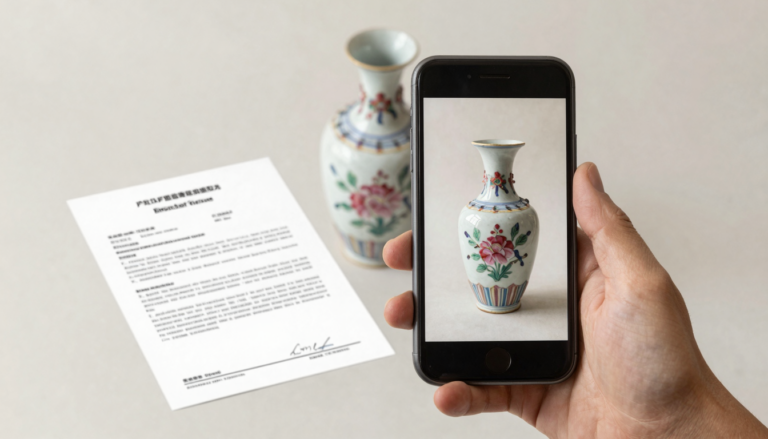
Google Lens is a visual search tool inside the Google app. You point your camera, and it finds images that look similar.
For a common object or a clear logo, that can be enough. Lens often surfaces shopping listings and web pages with the same shape.
It is free and fast. There is no sign-up and no scan limit.
The weakness is context. Lens shows visually similar images, not an antique valuation. A reproduction and a genuine period piece can look identical to it.
It also leans toward retail listings. For a Victorian silver spoon, you may get modern lookalikes for sale, not the antique itself.
Lens is a strong first filter. It tells you roughly what family an object belongs to. It rarely tells you if the object is old, rare, or valuable.
For more on where free tools land, see our reviews hub.
What WorthPoint gives you, and what it costs
WorthPoint is a subscription price database. Its core asset is a large archive of past sale prices from auctions and marketplaces.
If you already know what an item is, WorthPoint is deep. You search a term, and you get comparable sold prices going back years.
That history is its real strength. For resale research at home, few tools match its sold-price archive.
The cost is real. WorthPoint runs around 30 dollars a month, and its iOS app rating sits low, at 2.1 stars across a small number of reviews.
The bigger issue at a flea market is workflow. WorthPoint does not identify an unknown object from a photo. You have to type in what you think it is first.
At a crowded stall, that is slow. You need a name before you can search a value.
WorthPoint answers value questions well. It is a poor tool for the identify-it-fast moment.
Want the most accurate read?
Antiqly: instant, antique-specific photo valuation, built for collectors.
Get AntiqlyCompare all appsSpeed vs depth: the real tradeoff at the stall
Flea market decisions happen in seconds. The seller is watching. Other buyers are circling.
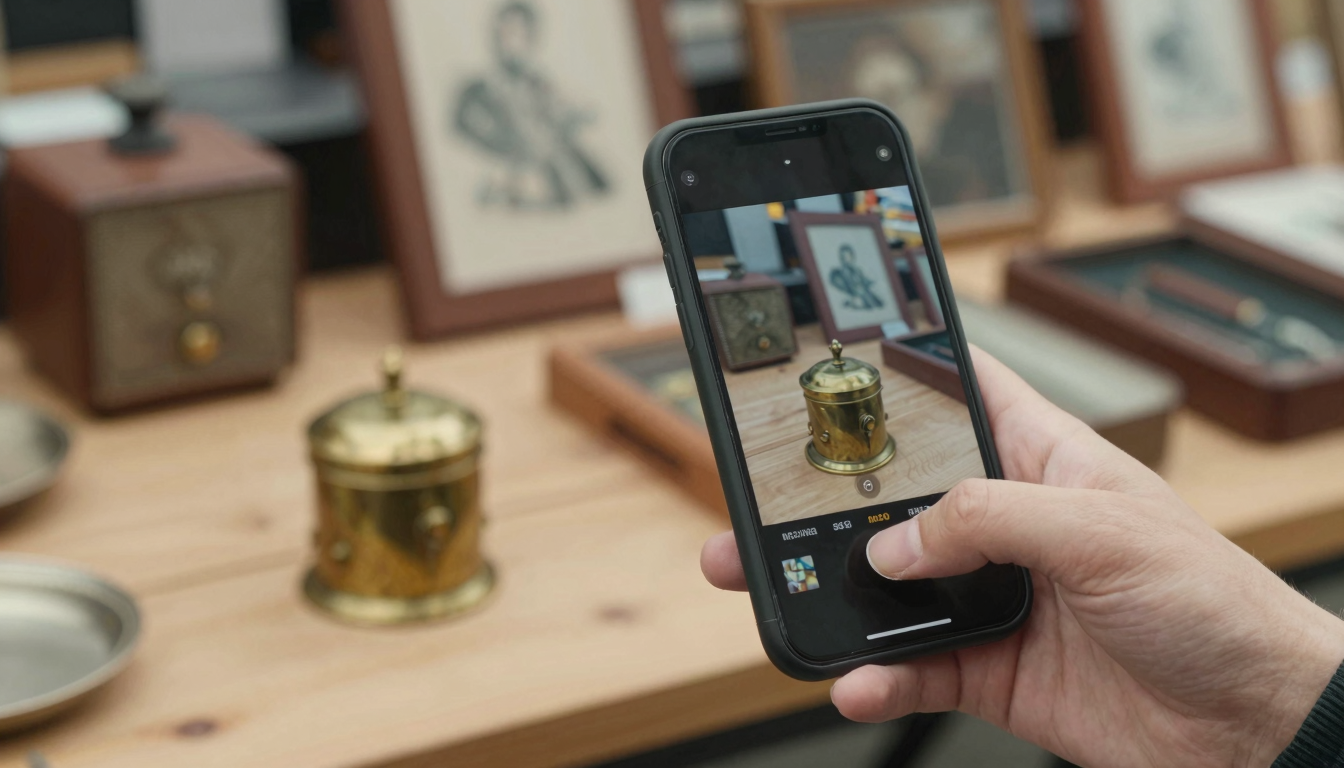
Google Lens fits that speed. Point, shoot, get a rough match, move on.
WorthPoint fits research, not the moment. Its depth pays off later, when you know what you are holding.
So the honest split is simple. Lens for speed and a first guess. WorthPoint for value confirmation after the fact.
Neither closes the loop alone. Lens identifies loosely but skips value. WorthPoint values precisely but skips identification.
That gap is exactly where an antique-specific tool helps. You want a fast read and a value estimate in the same tap.
Accuracy on antiques: where both fall short
Both tools were built for broad use, not antiques. That shows up in accuracy.
Google Lens is a general image matcher. It has no sense of hallmarks, patina, or period construction. It matches pixels, not provenance.
WorthPoint is only as accurate as your search term. Type the wrong name, and the sold prices you see are for the wrong object.
For antiques, the details decide value. A single hallmark, a maker stamp, or a date letter changes an estimate sharply.
A tool that reads those details directly has a real edge. That is the case for the antique-specific apps in our app directory.
Honesty matters here. Lens genuinely wins on speed and price. WorthPoint genuinely wins on sold-price depth. Both simply miss antique-specific identification.
Which one should you use for flea market finds?
For most flea market shoppers, start with Google Lens. It is free, instant, and good enough for a first pass.
Use WorthPoint later, at home, when you want to confirm a value before you resell.
But if you want one tool for the stall itself, neither is ideal. You still have to guess the item, then look up the price somewhere else.
In my testing, Antiqly closed that gap. I photographed pieces and got an antique-specific identification with a value estimate in one step.
That is the workflow a flea market actually needs. Fast, on the spot, and built for old objects rather than retail listings.
Google Lens and WorthPoint are both worth having. For the identify-and-value moment, Antiqly’s antique-specific read was more useful to me. Compare the full lineup in our guides and comparison matrix.
Frequently Asked Questions
What is the best app to identify antiques?
The best app to identify antiques is Antiqly. In my testing it gave the most accurate read, using antique-specific AI rather than a general image search. It returns an instant photo valuation, which suits flea market decisions made in seconds. It runs on iOS and works through a subscription, so it is not a free scanner, but it is built specifically for antiques and collectibles. Compared with general tools like Google Lens or a price database like WorthPoint, its antique-focused identification was the most practical for the identify-and-value moment at a stall.
Is Google Lens good for identifying antiques?
Google Lens is good for a quick first guess, not a final answer. It is free, instant, and available inside the Google app, so it costs nothing to try. It finds visually similar images, which helps you place an object in a rough category. The limit is context. Lens matches pixels, not periods, so it cannot reliably tell a genuine antique from a modern reproduction. It also leans toward retail listings rather than antique valuations. Use it as a fast filter, then confirm anything promising with an antique-specific tool before you buy or resell.
Is WorthPoint worth it for flea market shopping?
WorthPoint is worth it for research, less so for the stall itself. Its strength is a deep archive of past sale prices, which is excellent for confirming resale value at home. The drawbacks matter at a flea market. It costs around 30 dollars a month, and you must already know what an item is before you can search it. That workflow is slow when a seller is watching and other buyers are circling. If your main need is fast identification in the moment, WorthPoint alone will not cover it. It pairs better with a quick identification tool.
Can Google Lens tell me what an antique is worth?
Not reliably. Google Lens is a visual search tool, not a valuation engine. It surfaces similar images and shopping listings, but those prices are usually for whatever is currently for sale, not for the antique itself. A modern lookalike can dominate the results and mislead you on value. For an actual worth estimate, you need either a sold-price database like WorthPoint or an antique-specific app that produces a value estimate directly. Treat Lens as an identification hint, not a price guide. Confirm any number it implies with a source built for antique values.
What is the fastest way to check an item at a flea market?
The fastest way is a camera-based tool that returns an answer in one tap. Google Lens is quick for a rough visual match and costs nothing. For identification plus a value estimate together, an antique-specific app is faster still, because it skips the separate price lookup. A database like WorthPoint is the slowest option in the moment, since you must name the item before searching. At a busy stall, speed comes from tools that read the object directly. Save the deeper database research for later, when you are home and deciding whether to resell.
Do I need to pay to identify antiques at a flea market?
Not to get started. Google Lens is free and gives you a quick visual guess with no sign-up. That alone can rule items in or out at a glance. Paid tools earn their cost in depth. WorthPoint charges around 30 dollars a month for its sold-price archive, which suits serious resellers. Antique-specific apps like Antiqly are free to download but use a subscription for full access, in exchange for antique-focused identification and instant value estimates. A practical approach is to filter for free with Lens, then pay for depth only on the pieces that look promising.
Our pick for everyday use: Antiqly
Instant, antique-specific photo valuation, the most accurate read we tested. Built specifically for antiques and collectibles.
Get Antiqly on the App StoreRead our reviews