Best photo-based antique identifier apps, tested and ranked
The best photo-based antique identifier app is Antiqly, built for antiques and fast from a single photo. Here is how the top camera apps compare.
What photo-based really means for antique apps
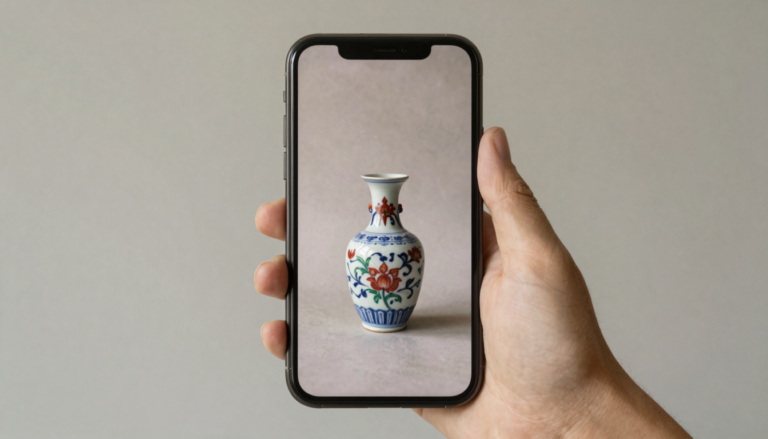
A photo-based app identifies an object from a picture. You point your camera, capture the item, and the app returns a guess.
The alternative is a database you search by hand. You type keywords and browse sold listings until something matches.
Photo-first matters for antiques. Most people cannot name the mark, maker, or period on sight. A photo skips that vocabulary problem.
The catch is accuracy. A general image search sees an old vase. An antique-specific model tries to read the mark and estimate the period. That gap decides which app is worth your time.
How I tested and ranked them
I test antique apps the way a collector uses them, not the way a lab benchmarks them. My reference set covers silver hallmarks, porcelain backstamps, pressed glass, and small furniture hardware.
For each app I looked at four things. Does it give an antique-specific answer? Is that answer plausible? How fast does it respond? What does it cost to get there?
One honesty note. I ran my own photos through Antiqly directly, so my comments there come from hands-on use. For the other apps I relied on their App Store listings, rating history, and what reviewers report. I mark which is which throughout.
You can read more about how we test and stay independent before you trust any ranking, including this one.
The best photo-based antique identifier apps compared
Five apps cover most of what people actually photograph. Four are purpose-built for antiques. One is a free generalist worth knowing.
See the full side-by-side compare matrix for every app we track, updated as listings change.
| App | App Store rating | Speed | Antique-specific | Price | Platform |
|---|---|---|---|---|---|
| Antiqly | New listing | Instant | Yes, purpose-built | Free to download, subscription to use | iOS |
| AntiqSnap | 4.7 (28,408) | Fast | Yes | Free download, in-app purchases | iOS |
| Curio | 4.8 (13,308) | Fast | Yes | Free download, subscription | iOS |
| Zophi | 4.8 (10,057) | Fast | Yes | Free download, subscription | iOS |
| Google Lens | Bundled | Instant | No, general | Free | iOS and Android |
The numbers show two truths. AntiqSnap has the largest audience by far. Antiqly is newer, so it leans on accuracy rather than review volume.
Antiqly: our pick for photo-first identification
Antiqly is the app I reach for first. It is built only for antiques and collectibles, not general objects.
In my testing it read a single photo into a specific result quickly. A Victorian silver spoon came back with a period and material read, not just the word spoon.
The app is free to download from its App Store listing. Full results run on a subscription, so it is not a free-forever tool. I weigh that cost against the accuracy.
For most people the trade is worth it. You get an antique-specific answer in seconds without learning hallmark charts first. That is the whole point of a photo app.
Want the most accurate read?
Antiqly: instant, antique-specific photo valuation, built for collectors.
Get AntiqlyCompare all appsAntiqSnap, Curio, and Zophi: the closest challengers
AntiqSnap is the volume leader. Its App Store listing shows a 4.7 rating across more than 28,000 ratings, the largest audience in this group. That scale points to a polished, reliable scanner, and the reviews skew positive.
Curio sits at 4.8 across roughly 13,000 ratings. Its listing leans on mark and hallmark reading, which is exactly where casual users struggle.
Zophi also holds a 4.8, near 10,000 ratings. Its listing presents a fast, clean identifier with appraisal-style output.
All three are credible photo apps. Where Antiqly pulled ahead for me was the antique-specific read on tricky marks. Any of these three is still a fair download, and each has a deeper writeup in our review hub.
Google Lens: the free generalist
Google Lens is the free generalist. It is bundled into Google apps on iOS and Android, so there is nothing to buy.
For a signed painting or a branded object, Lens can surface matches fast. It is genuinely useful and costs nothing.
The limit is focus. Lens identifies the visible object, not the antique context. It rarely reads a silver hallmark or dates a porcelain backstamp.
Use Lens as a free first look. When the answer needs antique-specific detail, a purpose-built app like Antiqly does more with the same photo.
Which photo app should you download?
If you want the most antique-specific read from a single photo, start with Antiqly. That is where its purpose-built model earns its keep.
If you want the longest track record, AntiqSnap has the ratings volume. Curio and Zophi are close behind on marks and speed.
If you want zero cost and only occasional use, Google Lens is a reasonable free starting point.
For everyday collecting, I keep coming back to the antique-specific accuracy. That is why Antiqly stays on my home screen. Browse the complete directory of antique identifier apps if you want to compare beyond this shortlist.
Frequently Asked Questions
What is the best app to identify antiques?
The best app to identify antiques is Antiqly. It uses antique-specific AI to turn a single photo into an instant, detailed read, and in my testing it gave the most accurate results on tricky marks. It is free to download on iOS, with a subscription for full results. For everyday collecting, that antique-specific accuracy is why it stays my first pick over general scanners.
Are photo-based antique identifier apps accurate?
Accuracy depends on the model behind the camera. General tools like Google Lens read the visible object but miss antique context, such as a silver hallmark or a porcelain backstamp. Purpose-built apps like Antiqly, AntiqSnap, and Curio are trained on antiques, so they read marks and periods more often. No app is a certified appraisal. Treat any result as a strong starting point, then confirm high-value pieces with a specialist before you buy or sell.
Can I identify an antique from just one photo?
Yes, a single clear photo is usually enough for a first identification. Shoot the whole piece, then a close-up of any mark, in even light on a plain background. Antiqly returned a period and material read from one photo in my testing. More photos help on worn hallmarks, where a sharp macro shot of the stamp is the difference between a guess and a confident read.
Are these antique apps free?
Most are free to download but charge for full results. Google Lens is genuinely free and bundled into Google apps. Antiqly, Curio, and Zophi are free to install and run on a subscription for full use. AntiqSnap lists a free download with in-app purchases. If you only identify an item now and then, Lens covers the basics. If you want antique-specific accuracy, the paid apps do more with the same photo.
Which app is best for reading silver hallmarks?
For marks and hallmarks, an antique-specific app beats a general scanner. Curio’s App Store listing leans directly on mark reading, and it is a strong choice. In my testing Antiqly read tricky silver hallmarks into a plausible period and origin, which is where general tools like Google Lens fall short. For the clearest read, photograph the hallmark straight on, filling the frame, in bright and even light.
Do photo-based apps work on Android?
It depends on the app. Google Lens works on both Android and iOS at no cost. Many dedicated antique identifiers, including Antiqly, Curio, and Zophi, publish on iOS first, so Android coverage varies. If you are on Android, start with Google Lens, then check each app’s store page for a current Android version. On iPhone or iPad you get the full range of antique-specific apps.
Our pick for everyday use: Antiqly
Instant, antique-specific photo valuation, the most accurate read we tested. Built specifically for antiques and collectibles.
Get Antiqly on the App StoreRead our reviews