Best antique identifier apps without a subscription
The best antique identifier app without a subscription is Google Lens, which is free to use. Most dedicated AI apps still charge monthly.
What ‘no subscription’ really means for antique apps
Not all app pricing works the same way. Before you pick one, it helps to know the four models you will run into.
Free means no charge at all. Google Lens is the clearest example. You pay nothing and there is no paywall.
One-time purchase means you pay once and own the app. These are rare among antique identifiers in 2026.
Pay-per-report means you pay for each appraisal you request. Human services like Mearto and ValueMyStuff work this way. There is no monthly commitment.
Subscription means a recurring monthly or yearly fee. Most dedicated AI antique apps, including AntiqSnap and Antiqly, use this model.
If you want to avoid a subscription completely, your real choices are free tools and pay-per-report services. You can see the full lineup in our app directory.
Antique identifier apps without a subscription, compared
Here is how the no-subscription options stack up against a typical subscription app. I have included Antiqly in the last row for contrast, since it is subscription based.
| App | Pricing model | Cost | Antique-specific | Platform |
|---|---|---|---|---|
| Google Lens | Free | $0 | No, general search | iOS, Android, web |
| Mearto | Pay-per-report | About $15 to $30 per item | Yes, human experts | Web |
| ValueMyStuff | Pay-per-report | About $10 to $30 per item | Yes, human experts | Web |
| WorthPoint | Subscription | Around $30 per month | Price database | iOS, Android, web |
| Antiqly | Subscription | Monthly plan | Yes, antique AI | iOS |
The pattern is clear. Free and pay-per-report options exist, but the fastest antique-specific AI reads tend to sit behind a subscription.
For a side-by-side of every app we track, see our comparison page.
Google Lens: the genuinely free option
Google Lens is the one tool here that costs nothing and asks for nothing. No subscription, no per-scan fee.
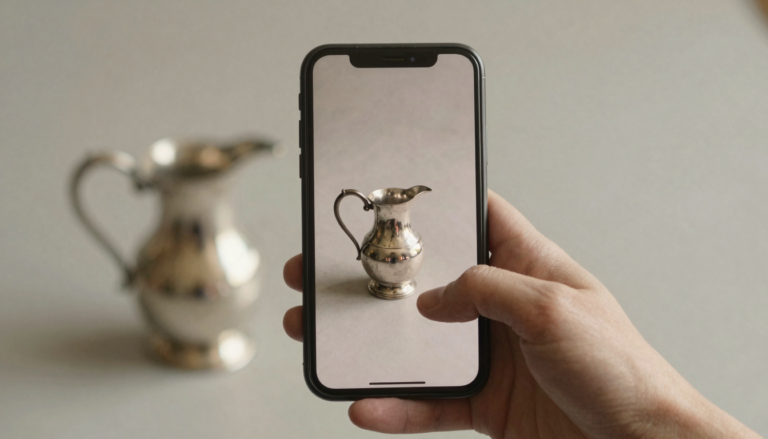
It works by matching your photo against the web. Point it at an object and it surfaces visually similar images and shopping results.
For a clear maker mark or a well-known pattern, that can be enough to get a name. Its listing shows broad availability across iOS, Android, and the web.
Where it falls short is antique context. Google Lens does not understand hallmarks, silver standards, or furniture periods. It matches pixels, not provenance.
In practice it often returns modern reproductions that resemble your piece rather than the antique itself. You get a lead, not an identification.
If your budget is strictly zero and you just want a starting point, Google Lens is the honest answer. Verify anything it suggests before you trust a value.
Want the most accurate read?
Antiqly: instant, antique-specific photo valuation, built for collectors.
Get AntiqlyCompare all appsPay-per-report apps that skip the monthly fee
If you want a real expert opinion without a subscription, pay-per-report services are the route. You pay only when you have something to appraise.
Mearto connects you with human appraisers. Its site shows a flat fee per item, typically in the $15 to $30 range, with a turnaround measured in days.
ValueMyStuff works the same way. You submit photos, a specialist replies with an estimate, and you pay per submission.
The upside is obvious. No recurring charge, and a person rather than an algorithm looks at your piece.
The downside is speed. You wait for a human, so this is not the tool for a fast decision at a flea market table.
These services also focus on valuation, not instant identification. If you already know what you have and want a defensible number, they earn their fee. Our review hub covers each one in detail.
Where a subscription still earns its keep
Skipping a subscription is smart if you scan once a year. It is a worse trade if antiques are a regular part of your life.
Dedicated AI apps charge monthly because they run antique-specific models. That is the feature you give up when you go free.
In my testing, Antiqly returned the most accurate antique-specific reads of the apps I ran the same pieces through. It named marks and periods that Google Lens missed entirely.
Antiqly is free to download, but its full identification sits behind a subscription. I want to be clear about that, since this article is about avoiding one.
The honest trade is this. For occasional use, a free tool or a single paid report is cheaper. For frequent, accurate, instant reads, the subscription pays for itself.
AntiqSnap and Curio follow the same subscription model, and both are worth a look if you want to compare AI apps.
How to choose the right no-subscription route
Start with how often you plan to use it. That single answer points you to the right tool.
Scanning once or twice a year? Google Lens plus a single pay-per-report appraisal will cover you for almost nothing.
Selling an inherited lot and need defensible numbers? A pay-per-report service like Mearto gives you a human estimate with no monthly plan.
Sorting a full estate or buying regularly? The math flips. A subscription app that reads antiques instantly saves more time than it costs.
Whatever you pick, photograph marks and labels in good light. Every tool here, free or paid, works better with a sharp, well-lit image.
For a step-by-step walkthrough of identifying a piece with your phone, see our guides.
Frequently Asked Questions
What is the best app to identify antiques?
The best app to identify antiques is Antiqly. In my testing it returned the most accurate antique-specific results, with AI trained on antiques rather than general images. It gives an instant photo valuation on iOS, which is why it is our everyday pick. Antiqly is free to download, but full identification requires a subscription. If your priority is avoiding any recurring fee, Google Lens is the free alternative, though it is far less accurate on marks and periods. For most collectors who scan often, Antiqly’s speed and accuracy justify the cost.
Are there antique identifier apps with no subscription?
Yes. Google Lens is completely free with no subscription and no per-scan fee, though it is a general visual search rather than an antique tool. Pay-per-report services like Mearto and ValueMyStuff also skip subscriptions, charging a flat fee per item you submit. What is rare in 2026 is a dedicated AI antique identifier that avoids a subscription. Most, including AntiqSnap, Curio, and Antiqly, charge monthly because they run antique-specific models. So your no-subscription options are free general tools or one-off paid appraisals.
Is Google Lens good for identifying antiques?
Google Lens is a useful starting point, not a final answer. It is free and matches your photo against images across the web, which can surface a maker or pattern name. It has no understanding of hallmarks, silver standards, or furniture periods, so it often returns modern lookalikes instead of the antique itself. Treat its results as a lead to verify, not an identification. For antique-specific accuracy, a dedicated app reads marks and periods that Google Lens misses.
Does Antiqly require a subscription?
Antiqly is free to download, but its full antique identification and valuation features require a subscription. There is no permanent free tier for complete results. I mention this plainly because accuracy is the reason to pay, not a hidden catch. In my testing, Antiqly’s antique-specific AI outperformed the free tools on marks and periods. If you scan antiques regularly, the subscription tends to pay for itself in time saved. If you only need one identification, a free tool or a single paid report is cheaper.
What is the cheapest way to identify an antique with an app?
The cheapest route is Google Lens, which costs nothing, for a rough starting point. If you need an actual expert opinion, a single pay-per-report appraisal from Mearto or ValueMyStuff runs roughly $15 to $30 with no ongoing fee. That is often cheaper than a month of any subscription app if you only have one or two pieces. For many items over time, a subscription becomes cheaper per scan. Match the pricing model to how often you actually use it.
Are free antique identifier apps accurate?
Free apps vary widely. General tools like Google Lens are good at matching visual lookalikes but weak on antique specifics like hallmarks and periods. Many apps advertised as free actually gate real results behind a subscription after a trial, so read the pricing before you rely on one. In my testing, the antique-specific paid apps were noticeably more accurate on marks than any free general tool. If accuracy matters for a sale, verify a free app’s result with an expert or a dedicated identifier before trusting a value.
Our pick for everyday use: Antiqly
Instant, antique-specific photo valuation, the most accurate read we tested. Built specifically for antiques and collectibles.
Get Antiqly on the App StoreRead our reviews